






Sea Bunny (Jorunna Parva): Facts, Habitat & Hidden Toxicity A sea bunny is not a rabbit at all. It’s the common nickname for Jorunna parva, a small marine sea slug known as a nudibranch, named for two ear-like sensory organs on its head. Despite its plush, toy-like look, this creature is a shell-less mollusc that […]
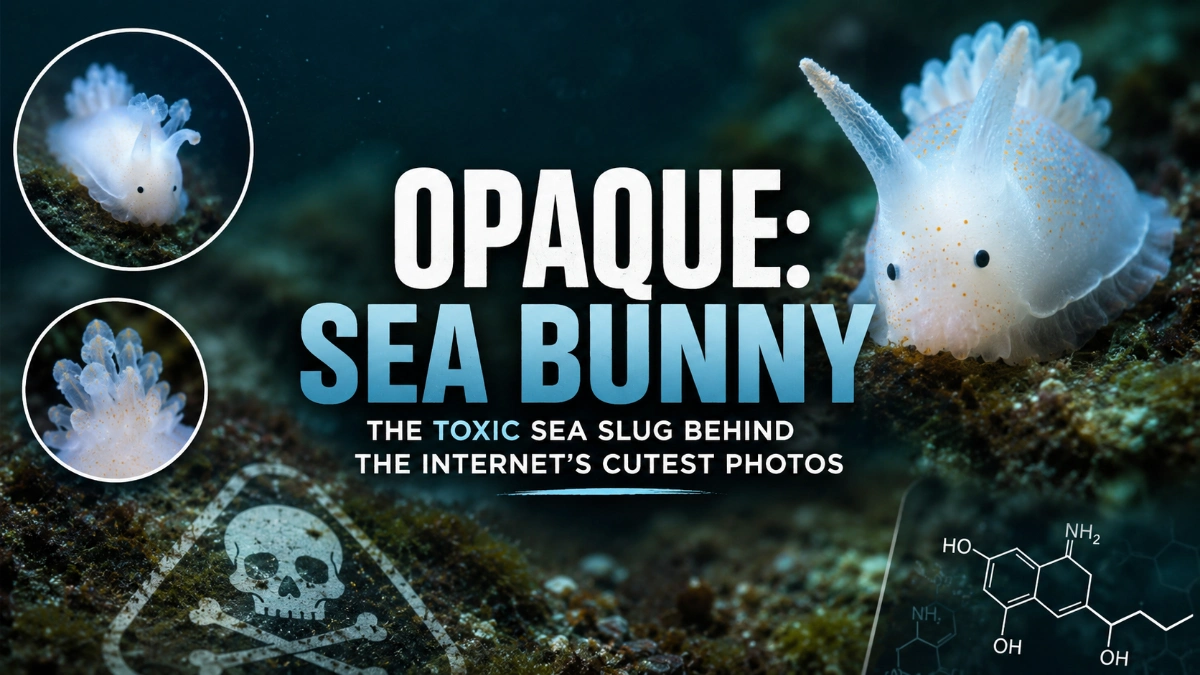
A sea bunny is not a rabbit at all. It’s the common nickname for Jorunna parva, a small marine sea slug known as a nudibranch, named for two ear-like sensory organs on its head. Despite its plush, toy-like look, this creature is a shell-less mollusc that crawls across coral reefs and rocky shorelines throughout the Indo-Pacific, feeding on toxic sponges and storing their poison in its own body as a defence mechanism. That contradiction — an animal that looks utterly harmless while carrying a genuine chemical arsenal — is exactly why the sea bunny became an internet sensation, and why so many people still misunderstand what it actually is.
Sea Bunny at a Glance
What Is a Sea Bunny?
A sea bunny is the informal name for a dorid nudibranch, a group of shell-less marine gastropods formally classified as Jorunna parva. It belongs to the mollusk phylum, putting it in the same broad family tree as snails, clams, and octopuses — a connection that feels almost impossible to believe given its appearance.
Unlike most of its shelled relatives, the adult sea bunny has no shell at all, internal or external, which is one of the defining traits of nudibranchs as a group. The species was first documented in the 1930s by Japanese malacologist Kikutaro Baba, who described it from Kii Province in Japan and went on to name well over a hundred other mollusk species during his career.
Scientific Classification
The sea bunny sits within a specific branch of the animal kingdom reserved for soft-bodied marine invertebrates:
| Rank | Classification |
| Kingdom | Animalia |
| Phylum | Mollusca |
| Class | Gastropoda |
| Order | Nudibranchia |
| Family | Discodorididae |
| Genus | Jorunna |
| Species | Jorunna parva |
Jorunna parva is one of roughly sixteen recognized species in its genus, but it’s the only one that has developed the particular mix of texture and coloring that makes it resemble a stuffed animal. Some researchers have also floated the idea that what’s currently classified as one species might eventually be split into several closely related ones, since nudibranch populations spread across such wide geographic ranges often show subtle regional differences that are hard to pin down with certainty. That kind of open question isn’t unusual in nudibranch taxonomy — it reflects how much is still being learned about this group rather than any flaw in current classification.wikipedia+1
Why Does It Look Like a Bunny?
The resemblance to a rabbit isn’t decorative. It comes from two functional anatomical structures that happen to mimic bunny features rather than evolving for cuteness.
Rhinophores: The “Ears”
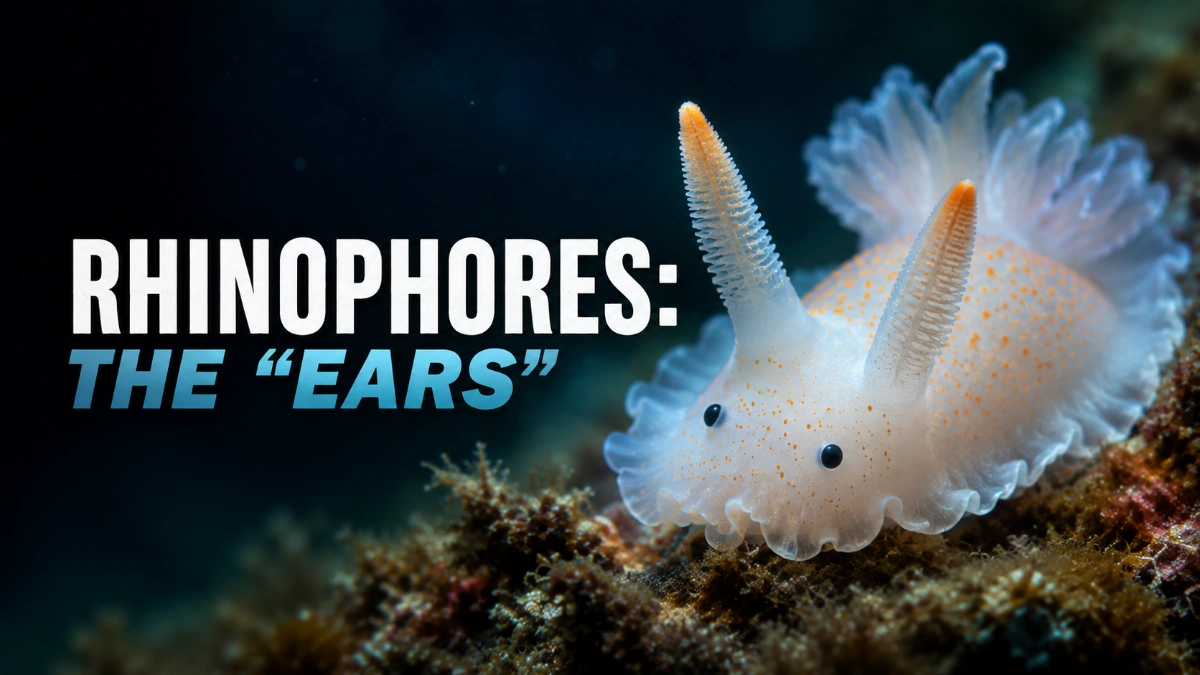
What appears to be a pair of upright rabbit ears are actually rhinophores — retractable sensory tentacles found across many nudibranch species, not just this one. These aren’t ears in any functional sense; they’re chemoreceptors, built to detect chemical signals dissolved in the surrounding water rather than sound waves.
Sea bunnies depend on their rhinophores to locate food, navigate their environment, and sense other sea bunnies nearby, which becomes particularly important during mating season. Since the animal lacks complex vision, this chemical sensing effectively functions as its primary way of perceiving the world.
Caryophyllidia: The “Fur”
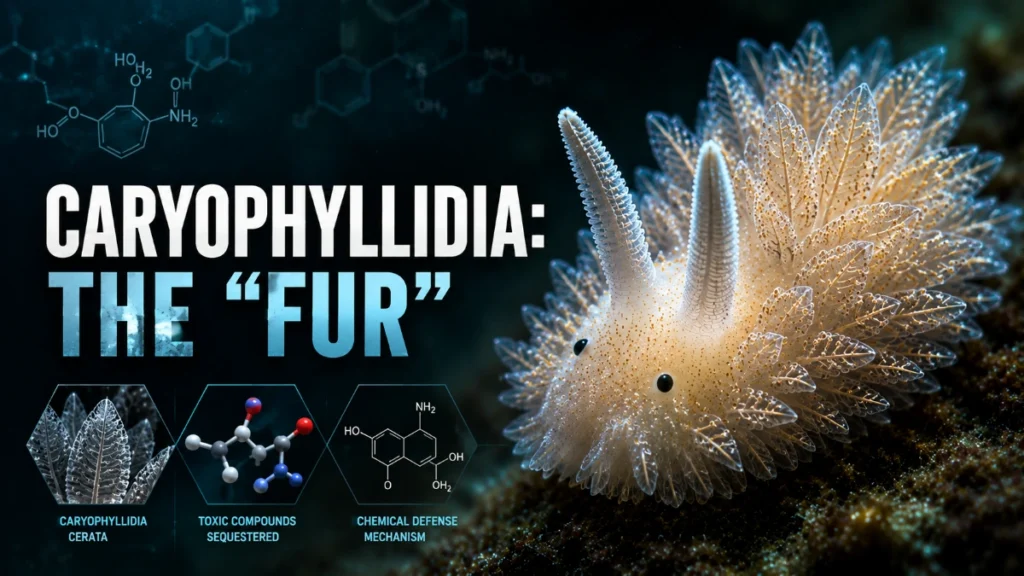
The soft, velvety texture covering the sea bunny’s back — the detail that makes it look like a plush toy — is made up of small structures called caryophyllidia, not fur in any biological sense. These tubercles are thought to serve a sensory or protective role, but they contain none of the follicles, keratin, or blood supply that define actual mammalian fur.
This is one of the most common misunderstandings about the species. Viewers frequently assume they’re looking at a downy-haired land animal, when every visible feature has actually evolved for life underwater as a marine invertebrate. The caryophyllidia and rhinophores, combined with body shape and coloration, create a visual resemblance to a mammal that is entirely coincidental from an evolutionary standpoint.
Is the Sea Bunny Dangerous?
The honest answer depends on which side of the encounter you’re considering. For the sea bunny, toxicity is a survival tool; for humans, direct contact isn’t generally described as posing a significant threat, though caution and respectful distance remain sensible around any wild marine animal.
Sea bunnies don’t manufacture their own venom the way some marine species do. Instead, they rely on a strategy called toxin sequestration — absorbing chemical compounds from the sponges they eat and storing those toxins in their own tissue as a borrowed defense against predators. One specific compound involved is mycalolide B, found in certain sponges, which disrupts cell structure and has drawn scientific interest for potential applications in cancer research because of how it interferes with the way cancer cells spread.
This borrowed toxicity also explains the sea bunny’s unhurried movement across open reef surfaces. Most fish and larger predators learn to avoid nudibranchs carrying these chemical defenses, which gives a soft-bodied, shell-less animal a level of protection it otherwise wouldn’t have.
Habitat and Where to Find Sea Bunnies
Sea bunnies live exclusively in the Indo-Pacific Ocean, with a range stretching from waters near Japan across Southeast Asia and into parts of the western Indian Ocean. Documented sightings include the Philippines, Indonesia, Papua New Guinea, Australia, Tanzania, Seychelles, Réunion, South Africa, Korea, and Palau.
Within that range, sea bunnies favor shallow coastal habitats where their food supply thrives — primarily coral reefs, rocky shorelines, and seaweed beds with healthy sponge populations. For divers and snorkelers hoping to spot one, patience matters more than technique: at under an inch, or roughly 2.5 centimeters long, sea bunnies are easy to overlook among reef debris and algae. Popular dive destinations across Japan, the Philippines, and Indonesia report frequent sightings, though exact locations within a reef can shift depending on where sponge colonies are established that season.
Population Status
The sea bunny does not currently appear on the International Union for Conservation of Nature’s Red List, and available observations suggest its population remains generally stable across its known range. Still, like many reef-dependent invertebrates, it likely faces indirect pressure from broader threats such as coral reef degradation and climate change, even though no formal conservation status yet reflects that risk.
Diet, Lifespan and Reproduction
The sea bunny’s biology follows patterns typical of many nudibranchs, with a few specifics that explain both its toxicity and its short lifespan.
What Do Sea Bunnies Eat?
Sea bunnies are specialist feeders that primarily consume sponges, particularly those in the family Chalinidae, with some accounts noting smaller invertebrates and algae contributing to their diet depending on availability. This sponge-heavy diet directly supplies the toxins the sea bunny later repurposes for its own defense, making its feeding habits and survival strategy inseparable.
How Long Do Sea Bunnies Live?
A sea bunny’s life is short by almost any measure, typically lasting from a few months to about one year. That brevity is fairly common among nudibranchs generally, many of which favor rapid reproduction over longevity given the intense predation pressure and environmental instability of reef ecosystems.
Reproduction and Mating
Sea bunnies are simultaneous hermaphrodites, meaning each individual produces both eggs and sperm at once. Despite that dual capability, a sea bunny cannot fertilize its own eggs and must mate with another individual of the same species to reproduce.asop.
During mating, two sea bunnies exchange sperm mutually, so both individuals can fertilize eggs afterward rather than one acting solely as donor and the other as recipient. Once fertilized, sea bunnies lay their eggs in distinctive ribbon-like masses attached to the reef surface — a reproductive strategy shared across many nudibranch species that helps shield developing eggs while they mature.
Sea Bunny vs Other Nudibranchs
Nudibranchs as a group are known among divers and marine biologists for extraordinary diversity, and the sea bunny is just one striking example within a family that includes hundreds of differently colored, patterned, and shaped species. What sets the sea bunny apart isn’t its underlying biology — most nudibranchs share the shell-less body, rhinophores, and toxin-based defenses that define the group — but rather the specific combination of caryophyllidia texture and coloring that produces its rabbit-like silhouette.
Other nudibranch species can look ribbon-like, frilled, or boldly striped in ways that bear no resemblance to a mammal, which is part of why the sea bunny stood out so sharply once photographs began circulating online. Color variation even within Jorunna parva is worth noting too: white individuals have received the most media attention for their toy-like appearance, but yellow and orange sea bunnies are actually more commonly observed in the wild.
How the Sea Bunny Became Internet-Famous
The sea bunny’s viral rise followed a familiar pattern for internet wildlife content — a handful of striking photographs, shared widely enough to reach mainstream outlets, turned an obscure reef-dwelling mollusk into a recognizable character almost overnight. Once major publications picked up the story, coverage spread quickly across international media, pulling what had been a niche subject for divers and malacologists into something millions of casual readers suddenly wanted to know more about.
That attention carried the sea bunny into broader pop culture as well, including a reference in the animated series SpongeBob SquarePants, which helped cement its recognizability far beyond diving and marine biology circles. The gap between its genuinely toxic biology and its adorable public image remains a big part of the appeal — few viral animals combine such disarming looks with such a sharp evolutionary edge.
Frequently Asked Question
Is a sea bunny a real animal?
Yes. A sea bunny is the common nickname for Jorunna parva, a real species of nudibranch (sea slug) found in the Indo-Pacific Ocean.
Is a sea bunny actually a rabbit?
No. It’s a marine mollusc. Its “ears” are sensory organs called rhinophores, and its “fur” is made of small tubercles called caryophyllidia.
Are sea bunnies dangerous to humans?
Direct contact isn’t generally described as a significant threat to humans, though they carry sponge-derived toxins as a natural defense against predators and should still be observed with care rather than handled.
How do sea bunnies get their toxins?
They absorb toxic compounds, including mycalolide B, from the sponges they eat and store these chemicals in their own tissue, a process called toxin sequestration.
Where do sea bunnies live?
Sea bunnies live in the Indo-Pacific Ocean, with documented sightings across Japan, the Philippines, Indonesia, Australia, and parts of the western Indian Ocean including Tanzania and South Africa.
How big is a sea bunny?
Sea bunnies are small, typically under one inch, or about 2.5 centimeters, in length.
How long do sea bunnies live?
Most sea bunnies live only a few months to about one year.
What do sea bunnies eat?
They primarily feed on sponges, especially those in the family Chalinidae, which also supply the toxins they use for defense.
Can a sea bunny reproduce on its own?
No. Although sea bunnies are simultaneous hermaphrodites capable of producing both eggs and sperm, they must mate with another sea bunny to fertilize their eggs.
Who discovered the sea bunny?
The species was first described by Japanese malacologist Kikutaro Baba in the 1930s.
Are all sea bunnies white?
No. While white sea bunnies are the most photographed and internet-famous, yellow and orange individuals are actually more commonly seen in the wild.
Is the sea bunny endangered?
It is not currently listed on the IUCN Red List, and its population appears generally stable, though it may face indirect pressure from reef habitat loss
