


Drive-In Movie Theater: A drive-in theater is an outdoor movie theater that has a large screen and allows people to park in front of it and watch movies from their car or another area with chairs. Most of the time, the movie’s audio will come through an FM radio station. Tickets are either purchased based […]
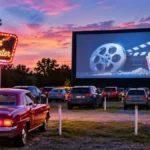
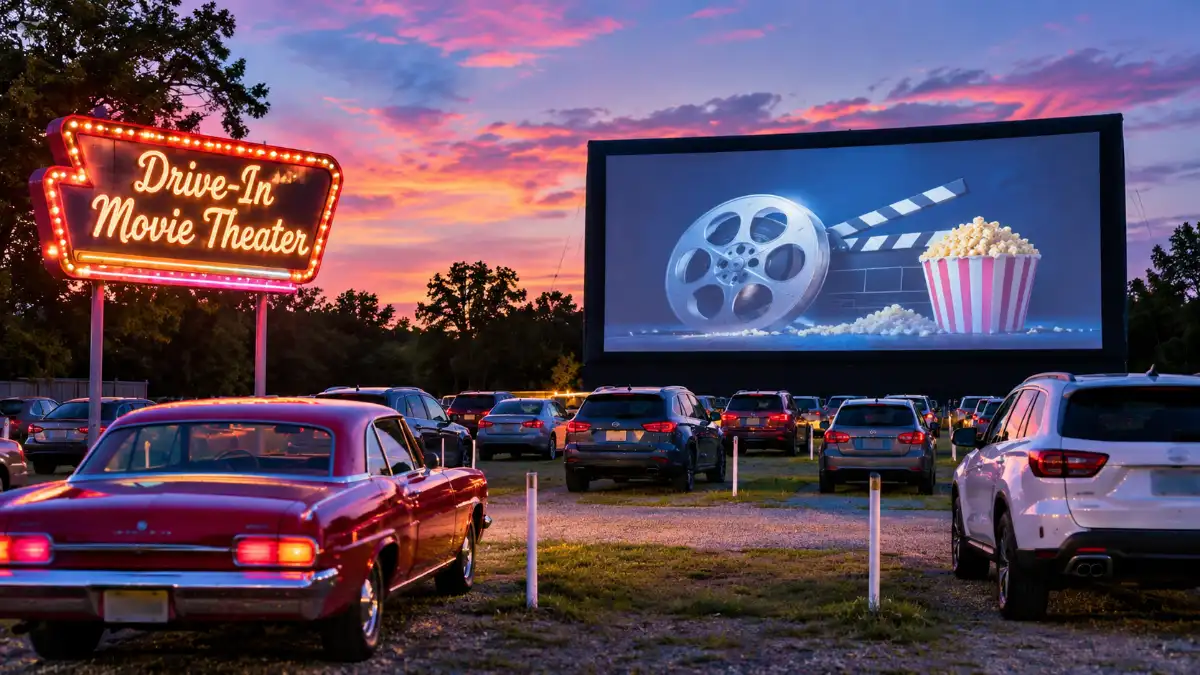
Drive-In Movie Theater: A drive-in theater is an outdoor movie theater that has a large screen and allows people to park in front of it and watch movies from their car or another area with chairs. Most of the time, the movie’s audio will come through an FM radio station. Tickets are either purchased based on the number of people attending or by the vehicle.
Drive-in theaters are generally more relaxed than indoor theaters, making them popular among families, couples, and friends. To avoid issues when you arrive at a drive-in theater, find out what movies are playing, how much tickets cost, where you can park, and what happens if it rains.
What Is a Drive-In Movie Theater?
A drive-in theater offers the best of both worlds – the ability to enjoy some of your favorite movies outside, and the comfort of being able to watch them inside of your own car. Rather than walking into a movie theater, customers pull up to a specific area of the parking lot, choose a location where they are allowed to park, and then look out onto a large projection screen.
The majority of screening times occur after sunset due to the fact that outdoor projections work most effectively in complete darkness. There are some theaters that will play just one film per screening event, whereas there are other theaters that will provide two films for the same price of admission.
Drive-ins offer patrons greater control of their environment than traditional movie theaters. For example, you have the ability to change where you sit, bring a blanket, and consume food and drink in front of people who are not strangers to you.
Every theater has established a set of guidelines that determine whether outside food, animals, seating arrangements, and vehicles may be brought into the facility.
How Does a Drive-In Movie Theater Work?
The process is simple, but there are some important facts that first-time users need to know.
Buying Tickets and Entering
To begin, check out the website of the theater you would like to go to. This will allow you to see what movies are being shown right now, as well as the times of each screening, and if there are any special rules or restrictions regarding entry into the theater. Depending upon which location you choose, you may be able to make your reservation online, or you might have to purchase your ticket(s) from a person working at the entrance of the theater.
The earlier you arrive, the better chance you have of getting a good parking spot. On popular movie days, such as weekends and holidays, large crowds may be present at the theater.
Staff will check your tickets at the entrance to the facility and can answer questions about where you should park. They will also let you know what radio frequency to tune into so that you hear the sound from the movie.
Parking and Watching the Screen
Typically, the vehicles are arranged in straight lines facing toward the screen. In addition, some drive-in movie theaters will have a higher level for their parking area to allow for better viewing.
Larger SUVs, trucks, and vans can be parked in certain areas so that smaller vehicles can pass.
After you have stopped, shut off both your lights and engine. Before you adjust your seat or open the back of your car, follow what the employee tells you to do.
Listening Through FM Radio
Most modern drive-ins transmit film audio through a local FM frequency.
Listen to the station shown on the movie screen. If you would rather sit outside, or if you don’t want to use up your car’s power with the radio going all night, then a portable, battery-operated FM radio may help.
An ordinary Internet Radio App is typically not able to take over for a physical FM Receiver.
How Much Do Drive-In Movie Theater Tickets Cost?
The cost of admission for movies varies based upon the city, the type of movie being shown, the age of the person attending the movie, and whether or not there are any special events occurring at that time.
There are some locations that require all passengers to pay their own individual entrance fee, and there are other locations that allow vehicles to enter for a set price.
For example, the published Shankweiler’s Drive-In admission policy shows that adults pay $12 per ticket, while children’s tickets are sold for $8, with all children under 3 years old receiving free entry.
These are specific rate advertisements for each venue (they do not represent the national average), and they may vary.
Prior to purchasing your ticket, please find out if it is valid for only one film or a double feature. Additionally, you should verify if there are any booking fees, refund limitations,s and if purchasing your ticket will guarantee you a specific parking location.
A less expensive ticket may not result in a less expensive night out when you factor in the costs of food, transportation, and other related expenses.
How to Find Drive-In Movies Near You
Usually, searching the internet to find nearby outdoor movie theaters would be the best way to start.
Use Google Maps or search for “drive-in movie theaters near me” in combination with either your city or state. Read the information from each theater’s official website, instead of relying completely on third-party sources.
The DriveInMovie theater directory provides yet another means of locating open theaters.
Before making plans, verify these details:
Current movie titles and screening dates.
Opening times and recommended arrival times.
Ticket availability and accepted payment methods.
Seasonal closures and weather-related changes.
Vehicle restrictions and accessibility arrangements.
Seasonal variations of drive-in theater operation can be found in areas where winter temperatures fall below freezing. However, there are also some drive-ins that will continue to function during the entire year.
In India, outdoor screening can be organized as a temporary event as opposed to a permanent drive-in theater. Prior to leaving home, make sure you know where the event will take place and how it operates.
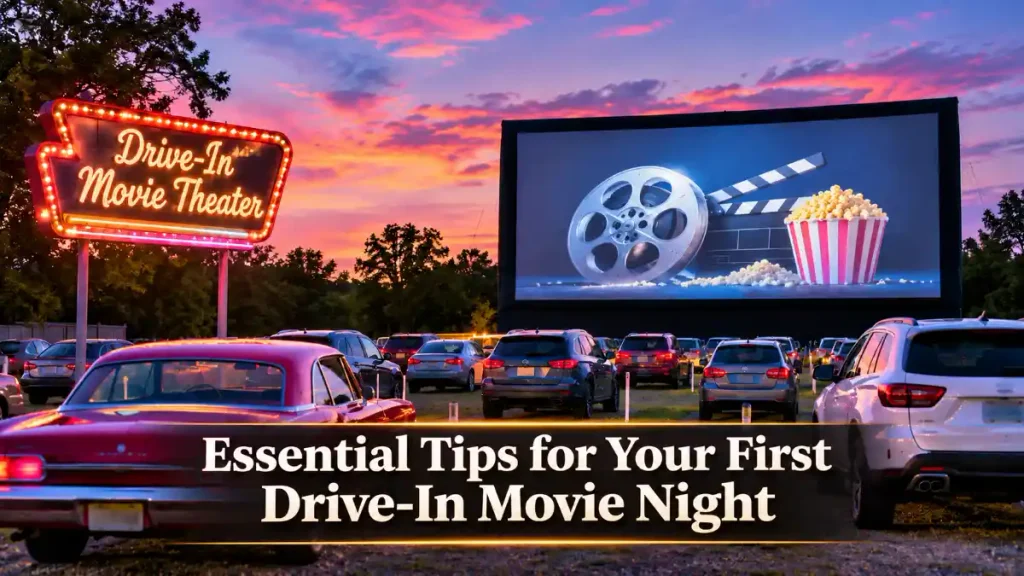
9 Essential Tips for Your First Drive-In Movie Night
A little preparation can make the experience considerably more comfortable.
Prepare Your Vehicle Before Arriving
Check to see if your car’s battery is able to run the radio without putting too much strain on the battery.
Learn about the operation of your vehicle’s lighting systems: find out how to shut down auto-headlights and interior lighting.
Clean your windshield: Dust, fingerprints, and condensation will make it hard to see through.
Portable radios are a great option for listening to music on the go.
Pack suitable clothes for the climate: Temperatures can drop significantly after dark, regardless of how warm it is outside.
Pack appropriate snacks and/or drinks: Verify if you can bring your own food and/or drink into the facility.
The arrival time of the event should be prior to the start of the program. Make sure there is ample time to park, use the restroom, and buy any items you may want to purchase.
Respect other vehicles near you by avoiding excessive noise, bright screens, and unnecessary movements.
Look at the forecast: Extreme weather, rain, and winds could impact your comfort or screening.
Avoid Common Parking Mistakes
Never operate your engine during the entire screening process, unless specified by the venue and when the safety environment allows for it. The exhaust emissions may pose a threat to people who are close to you.
Keep headlights, brake lights, and other exterior lighting off during the film.
In order to avoid blocking a fellow audience member’s view of the show with your open hatchback, please ensure that you adhere to any height restrictions for this type of vehicle.
Drive-In Theater vs. Traditional Movie Theater
Both options provide good film viewing opportunities; however, there are some practical distinctions.
| Feature | Drive-In Theater | Indoor Cinema |
| Seating | Vehicle or approved outdoor seating | Theater seats |
| Audio | Usually FM radio | Auditorium speakers |
| Weather | Outdoor conditions matter | Climate-controlled |
| Privacy | More personal space | Shared auditorium |
| Scheduling | Usually evening screenings | Multiple daily sessions |
| Food | Venue-specific rules | Cinema concessions |
Drive-in movies have an added appeal because of their casual atmosphere, the opportunity to spend time with your loved one on a romantic date, and to have a family-friendly outing that allows everyone to do what they want.
Indoor cinemas are preferred if you want a reliable audio experience, temperature control, and daytime viewings.
There is no “best” option; each individual will have to consider which option is more comfortable, accessible, weather-dependent, nd fits with their personal preferences.
Why Are Drive-In Movie Theaters Popular?
The drive-in was a major component of American entertainment in the 20th century.
According to the Smithsonian’s history of drive-in movie theaters, on June 6, 1933, Richard Hollingshead opened a drive-in theater for automobiles in New Jersey.
The concept was subsequently broadened as car ownership and the growth of suburban-based entertainment occurred.
Today, the appeal is more than just nostalgic. Seeing a film under the night sky provides a unique atmosphere that cannot be reproduced by standard theater environments.
The experience gives you the feeling of going out with other people to see a movie instead of just seeing the movie on the screen.
- Read more: Drive-In Movie Theater
Frequently Asked Questions
Can You Watch a Drive-In Movie Without a Car?
Some theaters permit walk-in visitors or outdoor seating, but others require a vehicle for admission. Check the venue’s accessibility and seating policies before purchasing tickets. A portable FM radio may be necessary when watching outside a car.
What Happens if It Rains During a Drive-In Movie?
Light rain does not always cancel screenings. Some theaters operate during rainy conditions, while severe weather can cause delays or cancellations. Review the venue’s refund and weather policies before traveling, especially when thunderstorms are forecast.
Can You Bring Your Own Food to a Drive-In Theater?
Food policies differ between locations. Some allow visitors to bring snacks and drinks, while others restrict outside refreshments or encourage purchases from their concession stands. Always check the specific theater’s rules rather than assuming outside food is permitted.
Will Listening to the Movie Drain Your Car Battery?
Using your vehicle’s radio while the engine is off can gradually drain its battery. The risk depends on battery condition, vehicle electronics, and screening duration. A portable battery-powered FM radio can help avoid this problem.
Are Drive-In Movie Theaters Suitable for Children?
Yes, many drive-ins welcome families with children. However, parents should check movie ratings, late screening times, restroom access, and venue safety rules. Children should remain supervised because vehicles may move through the parking area before and after screenings.