





Voodoo Doll: What Is It Really? A voodoo doll is commonly imagined as a small human-shaped figure used with pins to influence or harm another person. That image is extremely familiar in horror movies, television, tourist souvenirs, and popular culture—but it does not accurately describe the role of such figures in Haitian Vodou or Louisiana […]
Voodoo Doll: What Is It Really?
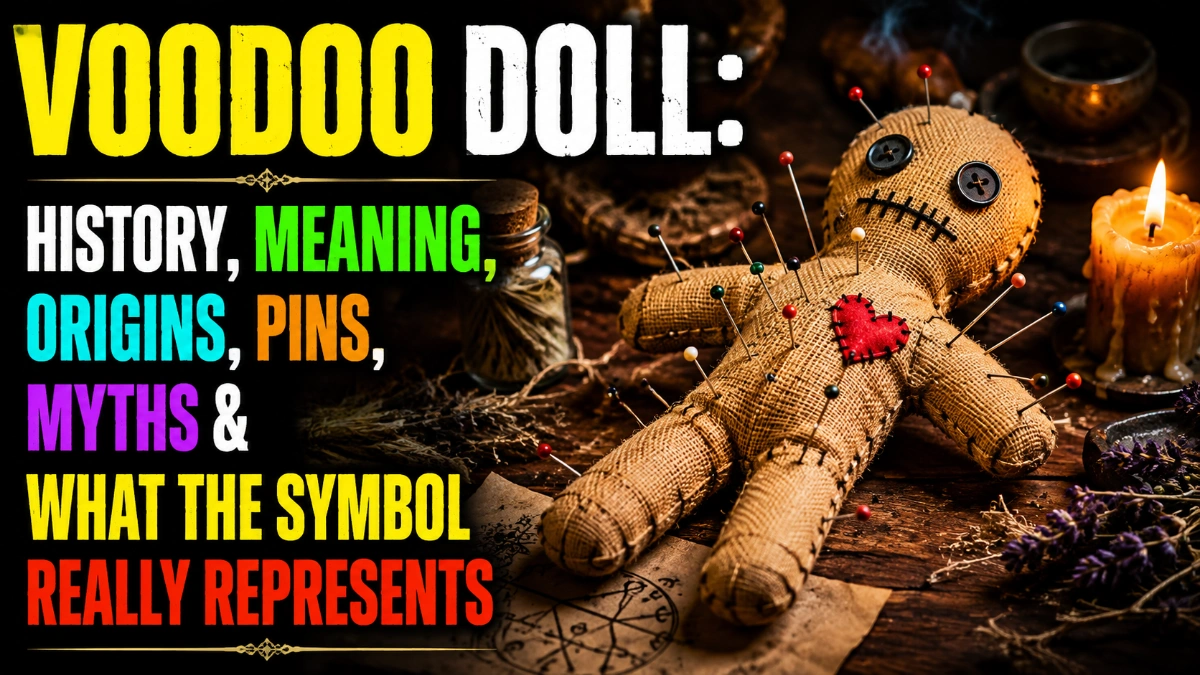
A voodoo doll is commonly imagined as a small human-shaped figure used with pins to influence or harm another person. That image is extremely familiar in horror movies, television, tourist souvenirs, and popular culture—but it does not accurately describe the role of such figures in Haitian Vodou or Louisiana Voodoo.
The historical picture is more complicated.
West African traditions include powerful figures known as bocio, particularly among the Fon peoples of present-day Benin. Museums describe these objects as empowered figures or protective surrogates that could be used to guard people and households against danger, illness, sorcery, theft, and other forms of misfortune.
At the same time, small human-shaped effigies also existed in European folk-magic traditions. The European poppet is an important part of the history behind the broader idea of using a figure as a symbolic stand-in for a person.
So the modern voodoo doll is best understood not as a single ancient object with one uninterrupted history, but as a modern label shaped by several different cultural traditions and later popular representations.
The most important distinction is this:
A stereotypical pin-filled “voodoo doll” is not a defining object of Haitian Vodou.
The Spencer Museum of Art specifically notes that so-called “voodoo dolls” do not have a prominent role in Haitian Vodou or Voodoo.
Voodoo Doll Meaning
The meaning of a voodoo doll depends heavily on the tradition being discussed.
In popular culture, the figure usually represents a person and is portrayed as a tool for sympathetic magic: something done to the figure is imagined to affect the person represented by it.
Historically documented African power figures such as the bocio, however, had much broader purposes. The Metropolitan Museum of Art describes Fon bocio as objects commissioned by priests and diviners for purposes including protection, detecting thieves, influencing weather, and shielding families from sorcery. They could function as surrogates or decoys intended to deflect danger.
The Smithsonian’s National Museum of African Art likewise describes bocio as empowered objects associated with protection, spiritual power, and efforts against threats such as illness, theft, and sorcery.
That makes the simple equation—
voodoo doll = object used to hurt someone
—far too narrow.
Where Did the Voodoo Doll Originate?There is no single, universally accepted historical moment when the modern “voodoo doll” was invented.
Instead, the modern image developed through overlapping traditions involving West African religious objects, European folk magic, Caribbean practices, and later American popular culture.
1. West African power figures
Among the Fon peoples of present-day Benin, ritual specialists created objects known as bocio.
The Metropolitan Museum describes bocio as protective surrogates. They could be placed in homes, shrines, fields, roads, or other locations and were intended to help protect people from danger.
The Michael C. Carlos Museum at Emory University explains the term bocio as meaning roughly “empowered cadaver” and describes the figures as decoys or substitutes associated with protection against misfortune, witchcraft, and death.
2. European poppet traditions
Europe also had traditions involving small figures or dolls representing people.
These objects are often called poppets. Depending on the particular tradition, they could be associated with healing, protection, love, or harmful magic.
This matters because the modern Western image of a small doll being manipulated with pins cannot automatically be attributed to West African Vodun.
3. Caribbean and American development
The forced migration of West Africans during the Atlantic slave trade brought religious and magical traditions into contact with European and American practices.
Over generations, these traditions changed within new social and religious environments. Haitian Vodou and Louisiana Voodoo developed their own distinctive histories and practices.
The modern phrase voodoo doll therefore risks collapsing several different traditions into one simplified image.
4. Popular culture
Movies, television, horror fiction, tourism, and commercial products helped turn the pin-covered doll into one of the world’s most recognizable symbols of “voodoo.”
That popular image is much simpler than the historical record.
What Is a Bocio?
A bocio is a ritual power figure associated particularly with Fon communities in Benin.
It is one of the most important objects to understand when discussing the history behind the modern voodoo-doll stereotype.
The Metropolitan Museum explains that bocio were prescribed by Fon priests and diviners and often served as protective mechanisms. Some were designed to intercept or deflect danger before it reached the person who commissioned the object.
The Michael C. Carlos Museum similarly describes bocio as empowered objects and explains that ritual specialists could activate them through the addition of materials and ritual processes.
The Smithsonian also records bocio associated with protection, spiritual power, illness, theft, sorcery, travel, and other concerns.
Importantly, bocio are not simply “voodoo dolls.”
They belong to specific West African cultural and religious contexts and can have forms, materials, functions, and meanings that differ substantially from the stereotypical doll sold or depicted in modern Western culture.
Were Bocio Used Only for Protection?
No.
Protection is a major documented function, but the historical record is more varied.
The Metropolitan Museum describes bocio as primarily proactive defensive mechanisms, while also noting that particular figures could be created for different purposes, including influencing weather, detecting thieves, and protecting families from sorcery.
Smithsonian collection records likewise document figures associated with both protection and the potential to direct harm toward an opponent.
This is an important point for understanding the subject accurately:
The historical tradition was not simply “good” or “evil.” Its meaning depended on the specific object, ritual specialist, community, and intended purpose.
Why Are Pins Associated With Voodoo Dolls?
The familiar image of a person sticking pins into a doll is one of the strongest stereotypes surrounding the voodoo doll.
But the connection is not as straightforward as popular culture suggests.
The Spencer Museum of Art defines the stereotypical “voodoo doll” as an effigy into which pins are inserted, while specifically explaining that such objects do not have a prominent role in Haitian Vodou or Voodoo.
The broader history of effigy magic includes European poppet traditions, where a figure could symbolically represent an individual.
Over time, different traditions and representations became blended together in popular American understandings of “voodoo.”
Hollywood and horror fiction then reinforced the visual shorthand:
doll + pins = voodoo
That association is culturally powerful, but it should not be mistaken for a complete description of Haitian Vodou or African Vodun.
Does Sticking a Pin in a Voodoo Doll Always Mean Harm?
No.
The assumption that every pin represents an attempt to injure someone is primarily part of the popular stereotype.
Historical evidence concerning West African power figures shows that ritual figures could have protective functions. The Metropolitan Museum, for example, describes bocio as protective surrogates intended to deflect danger.
Likewise, contemporary descriptions of symbolic doll practices can assign different meanings to objects and actions.
However, it is important not to present modern commercial or contemporary “voodoo doll” instructions as though they represent a single authentic Haitian Vodou tradition.
There is no universal system in which a particular pin color or pin location has one fixed meaning across all practices.
Is the Voodoo Doll Part of Haitian Vodou?
Not in the way popular culture usually suggests.
Haitian Vodou is a complex religious tradition with West African, Indigenous Caribbean, and Catholic historical influences. A stereotypical pin-filled voodoo doll is not a central or defining object of the religion.
The Spencer Museum of Art makes this distinction directly, stating that so-called “voodoo dolls” do not have a prominent role in Haitian Vodou or Voodoo.
This distinction is essential because using “voodoo doll” as shorthand for Haitian religious practice can turn a complex living tradition into a horror stereotype.
Haitian Vodou vs. West African Vodun vs. Louisiana Voodoo
These terms are related historically, but they should not be treated as interchangeable.
| Tradition / Term | General context | Why it matters to the voodoo-doll story |
| Vodun | West African religious traditions, including those associated with the Fon | Provides important cultural context for objects such as bocio |
| Haitian Vodou | A Haitian religious tradition shaped through African, Caribbean, and Catholic historical influences | The stereotypical pin-filled doll is not a central defining object |
| Louisiana Voodoo | A distinct tradition that developed in Louisiana within a different historical environment | Became strongly associated with the popular American image of “voodoo” |
| Voodoo doll | Modern popular label for a human-shaped effigy | Often blends several traditions into one simplified image |
| Bocio | Fon power figures from Benin | Documented as empowered objects with protective and other ritual functions |
| Poppet | European folk-magic term for a symbolic figure | Important to the wider history of effigy magic |
The key lesson is simple:
Vodun, Vodou, Voodoo, bocio, and poppets should not be treated as synonyms.
Voodoo Doll vs. Bocio: What’s the Difference?
| Feature | Modern “Voodoo Doll” Image | Bocio |
| Common popular image | Small cloth doll with pins | Ritual power figure |
| Cultural association | Popular Western culture | Fon communities of Benin |
| Primary stereotype | Influencing or harming another person | Protection and spiritual power |
| Materials | Often imagined as cloth | Wood plus varied attached or applied materials |
| Historical context | Modern popular representation | Documented African ritual tradition |
| Religious status | Not a defining object of Haitian Vodou | Associated with specific Fon religious traditions |
| Museum documentation | Often discussed as a cultural stereotype | Extensively documented in museum collections |
| Meaning | Varies by representation | Depends on figure, ritual context, and purpose |
Museum collections provide substantial documentation for bocio. The Met, Smithsonian, and Michael C. Carlos Museum all identify and contextualize examples from Fon communities in Benin.
What Materials Were Used in Historical Power Figures?
There was no single standard “voodoo doll” material.
Documented bocio can contain or incorporate materials including:
- Wood
- Cloth
- Iron
- Bone
- Fiber
- Shells
- Gourds
- Beads
- Other ritual or organic materials
The Smithsonian documents Fon figures made from combinations of wood, gourd, shell, and encrusted materials, while the Metropolitan Museum records examples involving wood, bone, teeth, wire, textiles, and applied organic material.
This diversity is another reason why the idea of one standardized “voodoo doll” is historically misleading.
What Does a Voodoo Doll Symbolize?
In popular culture, a voodoo doll usually symbolizes:
- Sympathetic magic
- Control over another person
- Curses
- Revenge
- Hidden supernatural power
Historically documented ritual figures can symbolize something much broader:
- Protection
- Spiritual power
- Guardianship
- Substitution or representation
- Defense against misfortune
- Ritual relationships between humans and the spiritual world
For example, the Met describes a bocio as a surrogate or decoy intended to intercept danger.
So the symbolic meaning depends on which tradition and which object you are actually discussing.
Do Voodoo Dolls Actually Work?
There is no established scientific evidence that a doll, by itself, can physically cause supernatural harm to another person.
That is different from saying that rituals have no meaning.
A ritual object can have cultural, psychological, symbolic, artistic, or religious significance without producing a scientifically measurable supernatural effect.
For an evidence-based article, it is therefore important to distinguish between:
Cultural or religious belief
and
scientifically demonstrated physical causation.
The historical documentation of bocio tells us what communities believed these objects could accomplish and how they were used. It does not establish that supernatural effects can be scientifically reproduced.
Why Did the Voodoo Doll Become Such a Powerful Horror Symbol?
The modern image became powerful because it is visually simple.
A small human figure is immediately recognizable. Add pins, a mysterious setting, and the idea that the figure represents another person, and the concept becomes easy to communicate in a film or story.
Popular culture gradually transformed a complex collection of traditions into a single visual formula.
That formula is convenient for horror:
someone controls a doll → the doll represents a victim → something happens to the victim.
But historical reality is considerably more complicated.
The Spencer Museum’s discussion of a photograph titled Voodoo Doll is particularly revealing: the museum explains that the title suggests an association with New Orleans Voodoo while noting that the stereotypical pin-filled doll does not have a prominent role in Haitian Vodou or Voodoo.
Marie Laveau and the Voodoo Doll Myth
Marie Laveau is one of the most famous names associated with nineteenth-century New Orleans Voodoo.
Her historical reputation has become intertwined with legends, tourism, fiction, and later popular representations of Voodoo.
That does not mean every story told about her—or every object associated with her in modern culture—is historically documented.
The same caution applies to claims that Marie Laveau invented, popularized, or routinely used the stereotypical pin-filled voodoo doll.
A responsible historical account should distinguish between:
- Documented historical evidence
- Later folklore
- Tourist storytelling
- Fiction and popular culture
That distinction strengthens the article’s credibility rather than making the story less interesting.
Common Voodoo Doll Myths
Myth 1: Every Voodoo Doll Is Designed to Hurt Someone
Reality: No.
Historical power figures such as bocio were often associated with protection and defense.
Myth 2: Voodoo Dolls Are a Central Part of Haitian Vodou
Reality: No.
The stereotypical pin-filled doll does not have a prominent role in Haitian Vodou, according to the Spencer Museum of Art.
Myth 3: All Voodoo Dolls Have Pins
Reality: No.
The “pins in a doll” image is a particular popular representation rather than a universal feature of ritual figures.
Historical bocio can contain many different materials and forms.
Myth 4: Bocio and Voodoo Dolls Are the Same ThingReality: No.
Bocio are specific Fon power figures documented in Benin. Calling every bocio a “voodoo doll” erases important cultural and historical differences.
Myth 5: There Is One Universal Voodoo Doll Ritual
Reality: No.
The traditions associated with Vodun, Haitian Vodou, Louisiana Voodoo, European poppet magic, and modern commercial “voodoo dolls” have different histories and meanings.
What Is the Difference Between Voodoo and Vodou?
The spelling can provide useful context, but spelling alone does not define an entire religious tradition.
Vodun is commonly used in discussions of West African religious traditions.
Vodou is commonly used for the Haitian tradition.
Voodoo is frequently used in English-language discussions of Louisiana Voodoo and in popular culture.
Because the terms have overlapping historical roots but distinct cultural contexts, an article about the voodoo doll should avoid treating them as interchangeable.
This is more than a spelling issue. It is a question of historical accuracy and cultural precision.
Why the Voodoo Doll Stereotype Is Misleading
The stereotype reduces a wide range of African, Caribbean, European, and American traditions to a single image.
That creates several problems.
It erases cultural differences
West African Vodun, Haitian Vodou, Louisiana Voodoo, and European folk magic developed in different historical circumstances.
It exaggerates the importance of the pin-filled doll
Museum evidence does not support treating the stereotypical doll as the defining object of Haitian Vodou.
It ignores protective traditions
Documented bocio were frequently associated with protection, guardianship, and deflecting danger.
It turns religion into horror imagery
Popular entertainment often emphasizes curses, possession, revenge, and supernatural violence because these ideas work well in fiction.
Historical and religious traditions are more complicated than that.
What the Historical Evidence Actually Supports
The strongest museum evidence supports several careful conclusions:
- Bocio are real historical objects associated with Fon communities in present-day Benin.
- Bocio could serve protective and defensive functions.
- Some figures could also be associated with directing force against threats or enemies.
- Bocio were ritually empowered objects rather than ordinary dolls.
- The stereotypical pin-filled “voodoo doll” is not a prominent feature of Haitian Vodou.
- The modern popular image should not be treated as a complete representation of Vodun or Vodou.
The evidence therefore points toward a more nuanced conclusion than the familiar horror-movie version.
Read more: Voodoo Doll: Real Origins, Common Myths, and How the Practice Actually Works
Frequently Asked Questions About Voodoo Dolls
No. The stereotype focuses on curses and harm, but historical traditions involving ritual figures included protective and defensive purposes. Fon bocio, for example, were frequently created as protective surrogates.
The stereotypical pin-filled doll does not have a prominent role in Haitian Vodou. The Spencer Museum of Art specifically highlights this distinction.
There is no single documented inventor or origin point for the modern concept. Its history involves multiple traditions, including West African ritual figures such as bocio and European effigy or poppet traditions.
A bocio is a ritual power figure associated particularly with the Fon peoples of Benin. Museums describe bocio as empowered objects that could serve protective, defensive, or other ritual purposes.
The pin-filled doll is a popular representation of sympathetic magic. Its association with “voodoo” should not be treated as evidence that pin use is a defining feature of Haitian Vodou.
No. The modern commercial doll is often made from cloth, but historical ritual figures have been made from many different materials. Museum records for bocio include wood, iron, bone, fiber, shells, gourds, beads, and other materials.
The broader historical tradition of ritual figures certainly includes protective functions. Bocio are a strong documented example of figures associated with protection and deflecting danger.
There is no established scientific evidence that a doll can produce supernatural physical effects on another person. Their cultural or religious significance is a separate question from scientific proof.
No. The terms are historically related but can refer to different traditions and contexts. Haitian Vodou, West African Vodun, and Louisiana Voodoo should be discussed with their individual histories in mind.
There is no good basis for treating the stereotypical voodoo doll as an invention of Marie Laveau. Her historical legacy has been surrounded by folklore and later popular representations, so claims about specific practices should be treated carefully.
Physical dolls and ritual figures certainly exist. What is not scientifically established is the claim that manipulating such an object can produce supernatural physical effects on another person.
The image is visually simple and highly effective in horror fiction. Films, television, tourism, and commercial culture helped turn the pin-covered doll into a shorthand symbol for “voodoo,” even though the historical and religious reality is much more complex.