






A cockatiel is a small Australian parrot with a distinctive crest, long tail, and sociable personality. These birds are popular companions because many enjoy whistling, playing, and spending time around people. They can suit first-time bird owners, but they are not low-maintenance pets. A healthy cockatiel needs a balanced diet, a roomy cage, daily movement […]
A cockatiel is a small Australian parrot with a distinctive crest, long tail, and sociable personality. These birds are popular companions because many enjoy whistling, playing, and spending time around people. They can suit first-time bird owners, but they are not low-maintenance pets. A healthy cockatiel needs a balanced diet, a roomy cage, daily movement and enrichment, patient handling, and access to an avian veterinarian.
What Is a Cockatiel?
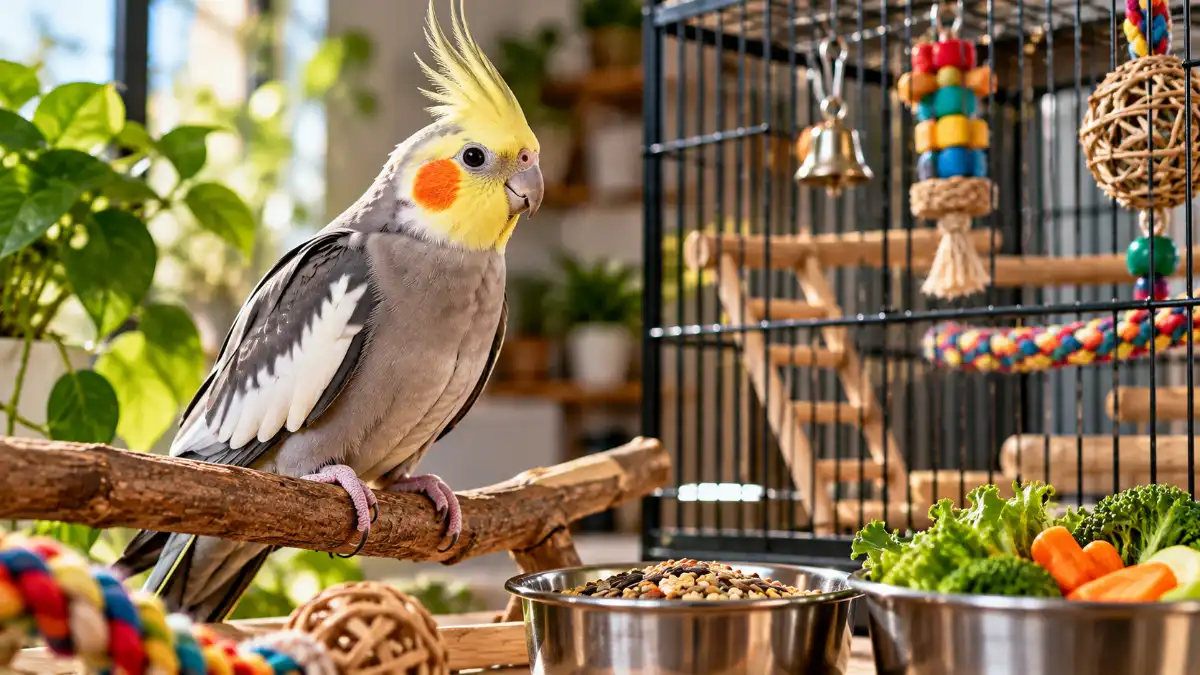
The cockatiel (Nymphicus hollandicus) belongs to the cockatoo family and is native to Australia. Adults average about 12.5 inches from head to tail, although much of that length is tail feathers. Wild-type birds have gray bodies, yellow faces, and orange cheek patches; cultivated color varieties include lutino, pied, pearl, and cinnamon.
The expressive crest is one of their best-known features.
Are Cockatiels Good Pets for Beginners?
Yes, for beginners who can provide consistent attention and learn basic bird care. A cockatiel is generally less demanding in space and noise than many large parrots, yet still needs social interaction, daily cleaning, mental stimulation, and veterinary visits.
Before bringing one home, consider household noise tolerance, travel plans, and whether you can supervise time outside the cage.
What Is Their Personality and Behavior Like?
Many cockatiels are curious, playful, and affectionate on their own terms. Others prefer whistling, exploring, or watching household activity without being touched.
Hissing, retreating, lunging, or holding the body rigid may mean a bird feels threatened. Give it room instead of pushing for contact. Calm routines and predictable interactions make it easier to build trust, especially with a newly adopted bird.
How Long Does a Cockatiel Live?
Veterinary reference VCA Animal Hospitals lists a typical lifespan of 10–14 years and a reported maximum of 24 years. Individual birds may live longer or shorter depending on genetics, nutrition, living conditions, accident prevention, and medical care.
Think beyond the first year: arrange a reliable caregiver for vacations, budget for veterinary expenses, and consider how changes in housing or work will affect daily care.
What Should a Cockatiel Eat?
A seed-only diet is not balanced. Seeds can be high in fat and inadequate in essential nutrients when offered as the main food. Veterinary guidance favors a formulated pellet-based diet, complemented by suitable vegetables, small amounts of fruit, and limited seed treats.
According to VCA’s cockatiel feeding guidance, pellets can make up approximately 75–80% of a bird’s diet, although your avian veterinarian may recommend a different balance for its health and activity. Introduce diet changes gradually; never abruptly remove familiar food if the bird is not reliably eating the replacement.
Provide fresh water every day. Avoid avocado, chocolate, alcohol, and caffeinated drinks, and ask a veterinarian before offering unfamiliar foods or supplements.
What Cage Size and Setup Do They Need?
For one bird, VCA gives a suggested minimum cage size of approximately 2 × 2 × 3 feet. This is a baseline, not an ideal target: more room for horizontal movement, wing stretching, and climbing is preferable.
Offer several appropriately sized natural perches, chewable toys, and opportunities to forage. Keep food and water stations clean and position the cage away from direct kitchen fumes, drafts, and heavy household traffic.
How Much Attention and Exercise Is Necessary?
Cockatiels benefit from daily social time, flight or movement in a bird-safe room, and activities that challenge their curiosity. Rotate toys, hide food in appropriate foraging materials, and practice brief training sessions rather than relying on a television for entertainment.
Before letting a bird out, close doors and windows, turn off fans, secure other pets, and cover unsafe water sources. If your cockatiel becomes unusually inactive, do not assume it is simply bored; a sudden behavior change can indicate illness.
Can Cockatiels Talk, Whistle, or Learn Tricks?
They are usually better whistlers than talkers. Some mimic familiar words or phrases, while others never speak clearly. Male birds are often more vocal, but sex does not guarantee a particular ability or personality.
Training can start with simple cues such as stepping onto a perch or approaching a target. Keep sessions short, reward voluntary responses, and stop if the bird becomes stressed.
How Can You Identify a Male or Female?
Adult wild-type males usually develop brighter yellow faces and lose the barred pattern beneath their tails. Females often retain tail barring and spots beneath their long wing feathers. Young birds may look alike before their first adult molt.
Appearance is less dependable in certain color mutations. If accurate sex identification is important, ask an avian veterinarian about DNA testing.
What Are the Warning Signs of Illness?
Birds often hide sickness. Changes in appetite, droppings, activity, vocalizations, balance, or grooming deserve attention. A fluffed-up bird that sleeps excessively, sits on the cage floor, or stops eating needs prompt veterinary assessment.
Labored breathing, marked weakness, collapse, or ongoing bleeding are emergencies. Female birds may also experience egg-laying complications. The Merck Veterinary Manual’s guide to illness in pet birds explains why subtle behavioral changes should not be ignored.
Which Household Hazards Are Dangerous?
Overheated cookware or appliances containing polytetrafluoroethylene (PTFE), sometimes associated with nonstick coatings, can release fumes that are rapidly fatal to birds. Smoke, aerosol sprays, perfumes, and strong cleaning chemicals may also harm their sensitive respiratory systems.
Additional risks include ceiling fans, open windows, hot surfaces, electrical cords, toxic plants, and accessible containers of water. Keep the bird out of the kitchen while cooking. If you suspect fume exposure, seek emergency veterinary help immediately rather than waiting for obvious symptoms.
The Merck Veterinary Manual’s household safety guide provides additional information about preventing accidents and poisoning.
What Should You Prepare Before Adoption?
Choose a spacious enclosure, suitable perches, safe toys, quality food, and a secure travel carrier before the bird arrives. Find an avian veterinarian nearby and plan for recurring costs, including food, replacement supplies, and medical care.
VCA recommends an examination by a bird-experienced veterinarian soon after acquisition, followed by routine annual checkups. If adopting another bird into a multi-bird home, ask your veterinarian about quarantine and disease screening before introducing them.
Conclusion
A cockatiel can be a rewarding companion for someone ready to meet its everyday needs. Choose this pet only if you can support its welfare throughout its life.
- Read more: Cockatiel
Frequently Asked Questions
How big does a cockatiel get?
Adults average around 12.5 inches long and weigh approximately 80–95 grams, according to VCA. Size and body condition vary by individual.
Are cockatiels noisy?
They whistle and call regularly, sometimes loudly. They are often quieter than larger parrots, but apartment neighbors may still hear them.
Does a cockatiel need another bird?
Not always. A single bird can thrive with frequent human companionship, stimulation, and attention. Another bird requires careful introductions and suitable space.
Can cockatiels eat only seeds?
No. Seed-only diets can cause nutritional deficiencies. Work with an avian veterinarian on a gradual transition to balanced nutrition.
Do cockatiels need baths?
Many enjoy gentle misting or a shallow, bird-safe bathing dish. Offer opportunities without forcing them, and avoid scented products.
How often should a cockatiel see a vet?
At least annually for a routine exam, with additional visits whenever illness, injury, or concerning behavior occurs.
Do cockatiels bite?
They can, especially when frightened, uncomfortable, or defending space. Watch body language and reward calm, voluntary interaction.
Can a cockatiel learn its name?
Many learn to respond to repeated sounds and familiar cues, although that does not necessarily mean they understand language as humans do.
Is a cockatiel good for apartment living?
Possibly, if building rules allow birds and neighbors tolerate occasional calls. Daily exercise and social interaction remain essential.