





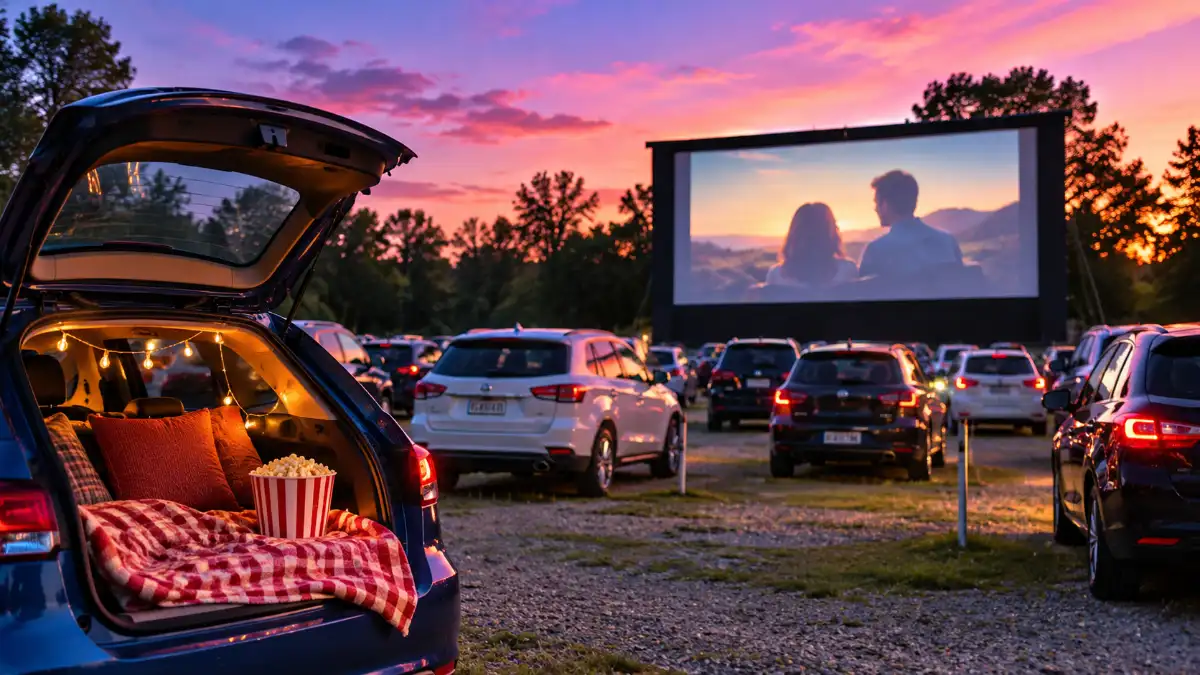
A drive-in movie theater is an outdoor cinema where you watch a film on a large screen from your parked car, or sometimes from chairs beside it. Most theaters deliver sound through a local FM radio frequency, so you can listen using your car stereo or a portable radio. To enjoy your first visit, check […]
A drive-in movie theater is an outdoor cinema where you watch a film on a large screen from your parked car, or sometimes from chairs beside it. Most theaters deliver sound through a local FM radio frequency, so you can listen using your car stereo or a portable radio. To enjoy your first visit, check the showtime and rules, arrive early, know how to switch off your headlights, and bring a comfortable way to hear the movie. Here’s what to expect, from tickets and parking to food, weather, and double features.
How Does a Drive-In Movie Theater Work?
Instead of walking into an auditorium, you drive through an entrance and park facing an outdoor projection screen. Staff or signs guide you into a designated parking area; taller vehicles may be directed toward certain rows to protect everyone’s view. If you have a large SUV, rooftop carrier, or tall hatchback, ask an attendant where it belongs before setting up.
Screenings usually begin around dusk, once the picture is visible against the darkening sky. If you want to watch from outside your vehicle, confirm that the theater permits chairs or an open tailgate. Keep your setup within the allowed space.
Tickets, Prices, and Arrival Times
Drive-in admission is not priced the same way everywhere. Some venues charge per person, while others sell a ticket per vehicle or offer particular carload deals. Check whether tickets are refundable if weather interrupts the screening. A ticket may be for a single movie or a full program, so read the listing before paying. Some venues do not permit reentry once you leave the lot.
Arriving 30–60 minutes before the movie is a reasonable starting point, but follow the venue’s gate-opening instructions. Popular weekend screenings may fill up earlier.
What to Bring to a Drive-In
A few items make the evening more comfortable.
| Item | Why it helps |
| Portable battery-powered FM radio | Plays the soundtrack without relying on your vehicle battery |
| Blanket or light jacket | Keeps you comfortable when temperatures fall after sunset |
| Folding chairs | Provide optional outdoor seating where the theater permits it |
| Insect repellent | Helps during warm evenings, especially near grassy areas |
| Phone power bank | Keeps your phone charged without running vehicle accessories |
| Payment method | Covers tickets and concessions; check whether cash is accepted |
Avoid equipment that obstructs another vehicle’s view.
How Do You Hear the Movie?
Most drive-ins broadcast the soundtrack on a short-range FM frequency displayed at the entrance or on the screen. Turn on your car radio, select FM, and tune to the posted number. If the venue has multiple screens, make sure you are listening to the frequency assigned to yours.
A portable FM radio is useful if your vehicle automatically turns off accessory power or you are concerned about draining the battery. A phone’s internet-radio app generally cannot receive a theater’s local FM transmission.
For a real-world example, Birdsong Drive-In’s official visitor information lists a separate FM frequency for each screen and says its sound cannot be streamed through apps. Check your own theater’s instructions rather than copying another venue’s frequency.
Birdsong Drive-in
Headlights, Batteries, and Parking Etiquette
Headlights are one of the biggest distractions at a drive-in. Learn how to disable automatic headlights, daytime running lights, and interior lights before arriving. Never alter a vehicle’s safety systems; consult its owner’s manual if the controls are unfamiliar.
If you open a hatchback, make sure it does not block the screen for cars behind you. Some theaters require hatches to be secured at a lower height.
It’s usually unnecessary to leave the engine running, and some venues restrict idling because of noise and exhaust. Using the radio with the engine off may drain an older or weak battery. Never run a vehicle in an enclosed or poorly ventilated area.
Food, Children, Pets, and Weather
Concession stands are a familiar part of the drive-in experience, offering snacks and drinks at many locations. Outside-food policies vary: some theaters allow it, some prohibit it, and others sell food permits. Check before packing a meal, and dispose of trash properly.
Children need close supervision in a dark parking lot with moving vehicles. Check the movie’s rating and the late finishing time, particularly if a second film is included.
Pets may be welcome at certain theaters, often subject to leash and cleanup rules. Others do not permit them.
A little rain does not necessarily cancel an outdoor screening, but thunderstorms, strong winds, or unsafe conditions may. The venue’s same-day updates should explain postponements, cancellations, and refund or rain-check rules.
What Is a Drive-In Double Feature?
A double feature means two films screen consecutively, often separated by a brief intermission. Some theaters include both with one ticket; others structure their programming differently.
Because screenings start after dusk, a double feature can finish well past midnight. Check both runtimes before bringing young children or planning a long drive home.
How Drive-In Theaters Became an American Tradition
Richard Hollingshead Jr. developed a car-based outdoor movie concept in New Jersey and opened his theater on June 6, 1933, in Pennsauken Township, just outside Camden. The first film was the British comedy Wives Beware. PBS documents the opening and his efforts to give drivers an unobstructed view of the screen in its history of the original drive-in theater.
PBS
Drive-ins grew popular during the 1950s. The Smithsonian’s history of drive-in theaters explains their growth and later decline.
Smithsonian Magazine
The exact number operating today depends on how seasonal sites, temporarily closed locations, and multi-screen businesses are counted.
How to Find a Drive-In Movie Theater Near You
Search for “drive-in theater near me” or browse a directory such as the DriveInMovie.com theater directory. Always verify the address, current films, gate hours, prices, and rules through the theater’s own website or official social media page before traveling.
driveinmovie.com
Final Takeaway
A little preparation makes an outdoor movie night much easier. Confirm your tickets and theater rules, check your lights and FM radio, and arrive with enough time to settle in.
- Read more: Drive-In Movie Theater
Frequently Asked Questions
Do drive-in movie theaters still exist?
Yes. Drive-ins still operate in the United States, though far fewer remain than at their mid-century peak. Many operate seasonally, so confirm current showings before visiting.
Do I need to leave my car running?
Usually no. Most people use the radio with the engine off or bring a portable FM radio. Follow the theater’s idling policy and your vehicle’s manual.
Can I hear the movie through my phone?
Usually not through a normal streaming-radio app. Drive-ins commonly transmit a local FM signal, so a working FM receiver is the more reliable option.
Can I sit outside my vehicle?
At many venues, yes. Folding chairs may be allowed next to the car, but seating boundaries and hatchback rules vary by theater.
Can I bring my own snacks?
Sometimes. Some drive-ins permit outside food, while others restrict it or require a food permit. Check the policy before entering.
What happens if it rains?
Light rain may not stop a show. Severe weather can cause cancellation or postponement, with refund policies determined by the venue.
Will my car battery die during the movie?
It can if the battery is weak or accessories draw power for hours. A battery-powered FM radio avoids depending on the car stereo.
Are drive-ins suitable for children?
They can be, provided the film is age-appropriate, and children are supervised around moving vehicles. Remember that screenings can finish late.
How early should I arrive?
Allow roughly 30–60 minutes before showtime as a starting point, but follow the theater’s published gate time and advice for busy nights.