






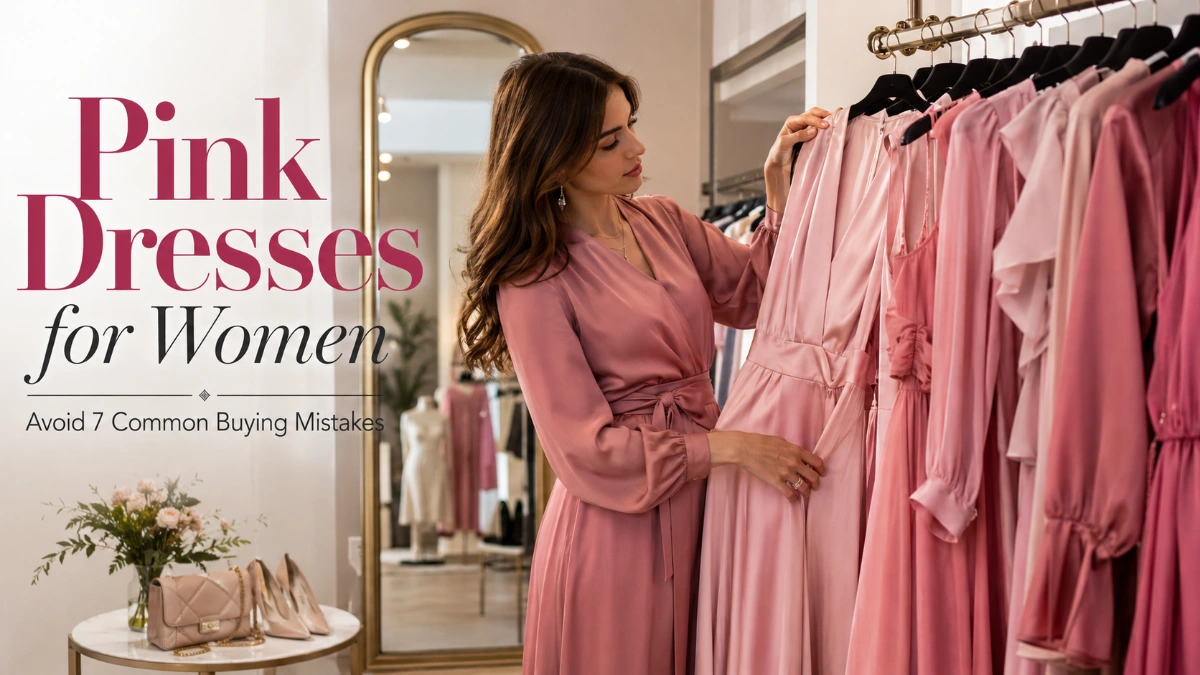
pink dresses for women: 7 Essential Tips for a Confident Choice A good pink dress should work beyond the product photo. The right choice depends on how the colour, silhouette, fabric, fit, and event work together—not on the shade alone. Mistake 1: Choosing Colour First It is easy to fall for a pink shade before […]
pink dresses for women: 7 Essential Tips for a Confident Choice
A good pink dress should work beyond the product photo. The right choice depends on how the colour, silhouette, fabric, fit, and event work together—not on the shade alone.
Mistake 1: Choosing Colour First
It is easy to fall for a pink shade before considering where you will wear the dress. Start with the occasion and the level of polish it needs, then decide how soft, bright, or statement-making you want the colour to be.
For relaxed daytime plans, an easy silhouette and lower-shine fabric may feel more natural. Dinners, parties, and celebrations can accommodate a bolder pink, a defined waist, or a smoother satin-like surface. These are styling directions rather than fixed rules.
Mistake 2: Treating Every Pink the Same
Pink covers a wide range, from pale and blush tones to rose, crimson, magenta, and hot pink. The observed VERO MODA collection includes light pink, crimson pink, rose pink, and magenta, showing why it helps to treat shade as a real decision rather than a single category.
Lighter colours can create a quieter look, especially with matte fabric and minimal accessories. Mid-tone rose shades offer more presence without the intensity of vivid pink, while bolder versions already bring substantial visual energy.
With brighter pink dresses for women, keep bags, shoes, and jewellery simple if you want the dress to remain the focal point. Product images are useful, but compare close-ups too: screen settings, lighting, and fabric sheen can alter how a colour appears online.
Mistake 3: Looking Only at Hem Length
Mini, midi, and maxi describe dress length, but they do not explain how a garment will sit or move. Wrap, shift, pleated, and fit-and-flare describe construction or silhouette, so these details need to be considered separately.
A mini may offer a playful look, but seated length, neckline coverage, and fabric weight affect how practical it feels. A midi is often easier to restyle with trainers for daytime or a refined shoe for a smarter setting.
A maxi provides more leg coverage, yet its formality depends on fabric and finish. A cotton-led maxi can suit warm-weather plans, while a lined, fluid design may feel more appropriate for an evening occasion.
Mistake 4: Ignoring Fabric Details
When browsing pink dresses for women, do not rely on fabric names alone. The observed VERO MODA range lists satin, rayon, silk, cotton, and polyester options, but each garment’s comfort and appearance still depend on its weight, lining, stretch, seams, and care requirements.
| If you need | A useful direction | Check before ordering |
| An easy daytime dress | Cotton or a breathable blend | Opacity, lining, wrinkles, wash guidance |
| Softer movement | Rayon or another fluid fabric | Stretch, transparency, care instructions |
| A polished surface | Satin or a satin-look finish | Lining, static, snag risk, reflected light |
| A closer-fitting style | Knit or stretch construction | Thickness, cling, recovery |
| More shape and definition | Structured blend or tailored construction | Seam placement, closure, mobility |
Satin describes a weave or finish, while polyester is a fibre. Read the full composition and care label, then inspect the construction details rather than assuming a fabric headline tells the whole story.
Mistake 5: Trusting Your Usual Size
Your usual label size is only a starting point. Fit and measurements vary between brands, so compare your current bust, waist, and hip measurements with the specific retailer’s chart before you choose a size.
Measure the fullest part of your bust, the narrowest part of your waist, and the fullest part of your hips. If the dress has a structured bodice or shoulders, check shoulder measurements too when the retailer provides them.
If your measurements fall between two sizes, follow the retailer’s stated instructions. VERO MODA recommends choosing the larger size or ordering both sizes and returning the one that does not fit, where that return option is available.
Also compare the garment’s listed length with your height and planned footwear. This matters especially with mini and maxi styles, where a small length difference can change coverage and proportion.
Mistake 6: Over-Styling the Outfit
The dress, rather than every accessory, should usually carry the look. Bright, shiny, printed, or embellished pink dresses for women often work best with understated shoes, a clean bag, and limited jewellery.
A pale or minimal dress gives you more room for contrast. You might add a textured jacket, distinctive shoe, or one visible jewellery piece. Gold-toned jewellery can sit well beside many pinks, particularly if the outfit already has a warm detail in the bag, shoes, or makeup.
For footwear, white trainers can keep casual dresses relaxed, neutral sandals suit many warm-weather plans, and black heels offer deliberate contrast with vivid pink. Use the event and fabric finish as the final guide.
Mistake 7: Skipping the Practical Checks
Before buying pink dresses for women online, check the product details that a styled photograph cannot answer:
- Compare your measurements with the brand-specific size guide
- Read the fabric composition, lining, stretch, fastening, and care notes
- Inspect close-up images for texture, seams, closure, and transparency
- Compare the stated length with your height and the shoes you expect to wear
- Consider underwear compatibility with straps, neckline, fabric, and colour
- Review return and exchange conditions before removing tags or wearing the dress
- Think about repeat wear, not only the first event
This final check protects against avoidable surprises. A dress that is comfortable, appropriately lined, and adaptable to more than one setting is often a better wardrobe choice than one that works only in a product image.
Frequently Asked Questions
A mid-tone rose pink is often a flexible option because it sits between pale and very vivid shades. Fabric, accessories, and the occasion will still shape the final result.
Yes, if it suits the dress code. A refined finish, considered hem length, polished footwear, and restrained accessories usually influence formality more than colour alone.
A midi is often easier to adapt from daytime to a more polished setting. A maxi gives more coverage and can feel relaxed, dramatic, or formal depending on the fabric and construction.
Choose based on how and where you plan to wear it. Cotton-led options can suit relaxed plans, fluid fabrics can create drape, and satin-like finishes can look more polished; check the actual composition, lining, stretch, and care details.
Take current bust, waist, and hip measurements, then use the retailer’s own size chart. Do not assume the same labelled size will fit the same way across different brands.
White trainers work for casual looks, neutral sandals suit many warm-weather outfits, and black heels create contrast with brighter pinks. Match the shoe to the dress’s fabric, length, and setting.
Yes. Gold-toned jewellery can complement many pink outfits. If the dress is already bold, shiny, or detailed, fewer or smaller jewellery pieces can keep the outfit balanced.
Check the brand chart, garment length, composition, lining, stretch, close-up images, care instructions, and return conditions. These details are often more useful than relying on a single model image.