





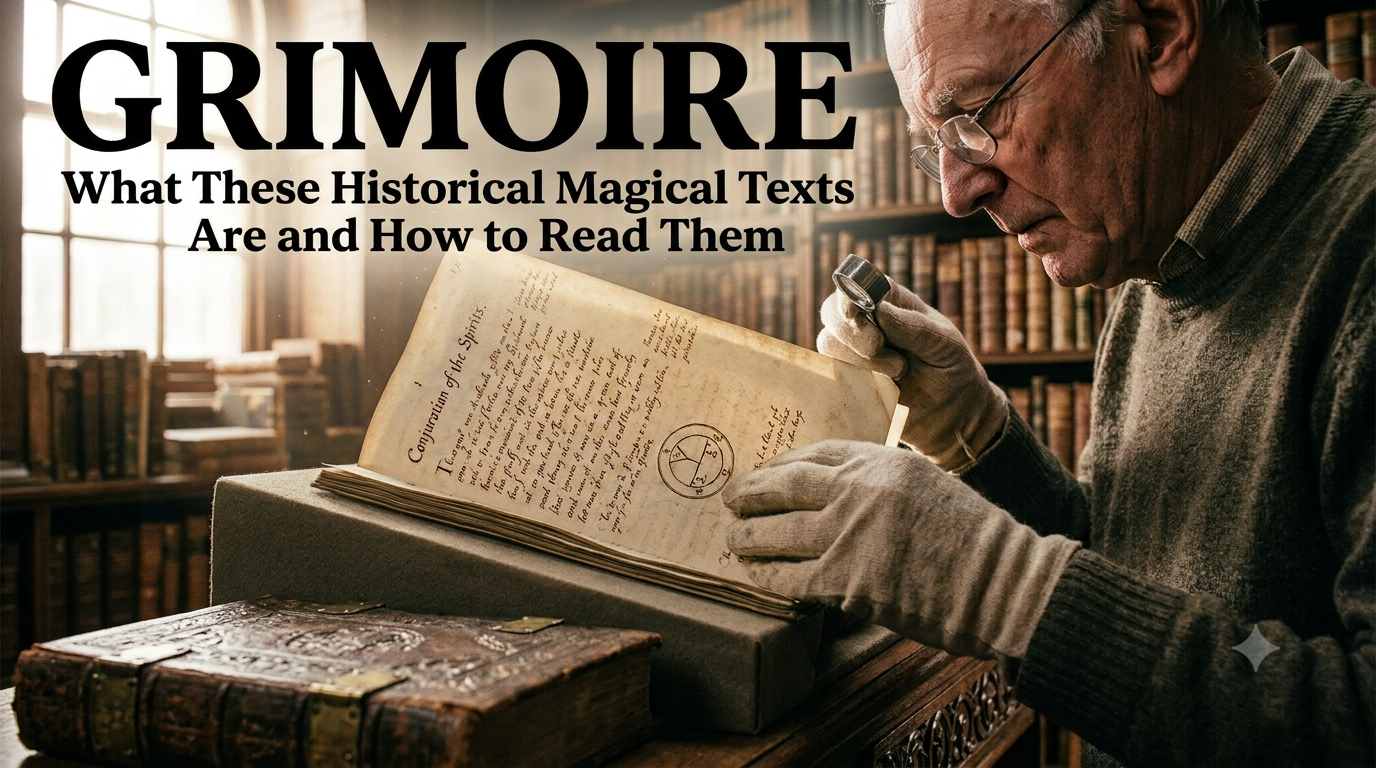
Grimoire: 5 Surprising Facts Behind This Mysterious Term A grimoire is a historical term for a book or manuscript that instructs a reader in ritual magic, typically through prayers, invocations, symbols, astrological timing, and procedures for making protective or ceremonial objects. The label is a modern umbrella term applied unevenly across centuries and languages, so […]
Grimoire: 5 Surprising Facts Behind This Mysterious Term
A grimoire is a historical term for a book or manuscript that instructs a reader in ritual magic, typically through prayers, invocations, symbols, astrological timing, and procedures for making protective or ceremonial objects. The label is a modern umbrella term applied unevenly across centuries and languages, so not every text now called a grimoire originally carried that name, and individual works must be read in their own historical context rather than as parts of one uniform tradition.
What these texts typically contain
The contents of a grimoire vary by period, region, and manuscript line, but many examples combine divine or spirit names, ritual preparations, diagrams, protective formulas, and instructions timed to astrological conditions. Aims recorded in these texts may include protection, healing, communication with spirits, or influence over circumstances, though the specific goals differ from manuscript to manuscript rather than following one fixed template.
Many surviving examples blend material that a modern reader might separate into religion, astrology, medicine, and folk practice. That blending reflects the intellectual and devotional world in which scribes copied and adapted these texts, not a single self-contained occult system.
Where the word comes from
The word grimoire is generally traced to the Old French gramaire, related to grammar and learned writing. Because Latin scholarship was inaccessible to most people in the medieval period, “grammar” came to carry associations with obscure or specialized knowledge, and over time the term narrowed toward manuals of conjuration and charms in French usage. The exact stages of that narrowing are not fully settled among linguists, so this connection is best treated as a well-supported but incompletely documented development rather than a fixed timeline.
Historical setting and examples
Manuscripts now called grimoires were copied, translated, and revised across generations, which means many surviving versions differ from one another in title, content, and attributed author. The category is especially well documented in European medieval and early modern manuscript culture, though related traditions of magical and astrological handbooks existed elsewhere in the medieval world with their own separate histories, rather than belonging to one shared genre.
A small number of frequently studied examples illustrate this complexity:
- The Sworn Book of Honorius survives in manuscripts dating to the fourteenth century, with earlier references suggesting composition in the High Middle Ages, though its precise origins remain debated among historians.
- The Key of Solomon exists as a family of related manuscripts in several languages rather than one fixed original text, and later printed editions reorganized and expanded this material further.
- The Heptameron, first printed in 1559, was attributed to the physician Peter of Abano despite most historians rejecting that attribution, and it drew on older ritual sources that predate its printed form.
- The Picatrix began as an Arabic work on astrology and magic compiled in Islamic Spain around the tenth century, later translated into Castilian and then Latin in the thirteenth century, becoming an influential source for later European magical writing.
These examples show that a grimoire’s title and attributed author often reflect later scribal or editorial tradition rather than a single verified point of origin.
| Term | Usual meaning | Key distinction |
| Grimoire | A historical or modern manuscript or book of ritual magical instruction | Often implies charms, invocations, or procedural ritual content documented in manuscript or print history |
| Spellbook | A general popular term for any book of spells | Broader and less historically specific; commonly used for fiction, games, and casual modern usage |
| Book of Shadows | A ritual or instructional text used within Wicca and related contemporary Pagan traditions | Often personal or coven-specific in content, and not an ancient synonym for every historical magical manuscript |
| Occult text | A wide label for writing about hidden or esoteric knowledge | May cover philosophy, divination, or mysticism without necessarily being a ritual manual |
A named grimoire should not automatically be assumed to represent a single stable, original work by the author in its title, since compilation, translation, and later reshaping are central features of this textual history.
How to read one critically
Encountering a grimoire in a modern edition, museum catalogue, or online excerpt calls for basic source evaluation rather than acceptance of dramatic claims. These checks help assess transparency, not certainty:
- Look for provenance, such as a named manuscript, archive, or shelfmark.
- Check whether an editor or translator explains their source and method.
- Separate the original text from modern commentary, illustrations, or added rituals.
- Note whether an early origin story is supported by surviving manuscripts or only by later tradition.
- Treat any claim of magical effectiveness as a matter of belief, not verified fact.
These checks do not guarantee historical accuracy or safety on their own. Readers evaluating claims about health, legal matters, or personal risk should consult qualified professional sources rather than any historical or modern magical text.
Why these books still matter
A grimoire offers a window into how people recorded fears, devotional practices, and attempts to manage uncertainty, and their transmission across languages and religious communities says as much about book history as about magic itself. Their influence is also visible in fantasy fiction, film, games, and contemporary occult and Pagan communities, where the word often signals a mysterious or forbidden book rather than a specific historical category. Understood in context, a grimoire is best treated as evidence of cultural and religious history rather than as a guide with demonstrated supernatural results.
Frequently Asked Questions
Yes. Historical manuscripts and printed books containing magical instructions genuinely exist and survive in libraries and archives. Their existence and past use do not, however, verify any supernatural claims made within their pages.
No. Spellbook is a broad modern label used casually across fiction and popular culture, while the historical term is more specific to documented ritual manuscripts with their own transmission history.
Not exactly. A Book of Shadows is particularly associated with Wicca and contemporary Pagan practice and is often personal or tradition-specific, whereas the historical category discussed here is typically older and tied to manuscript transmission across Europe and beyond.
Often, no single verified author exists. Many were attributed to famous scholars or biblical figures long after the fact, while the real text passed through generations of anonymous scribes, translators, and editors.
No. Many European examples combine Christian prayers, sacred names, and angelic material with astrology and folk practice, while separate magical-text traditions also developed within Islamic and other religious and cultural settings.
Yes. Some editions combine multiple manuscript sources, translate selectively, or add modern material without clearly separating it from the original text. Checking for named provenance and editorial transparency helps identify this.
Because these titles describe manuscript families rather than single fixed works. Copyists and later editors reorganized, translated, and expanded the material across centuries, producing multiple related versions under the same name.