







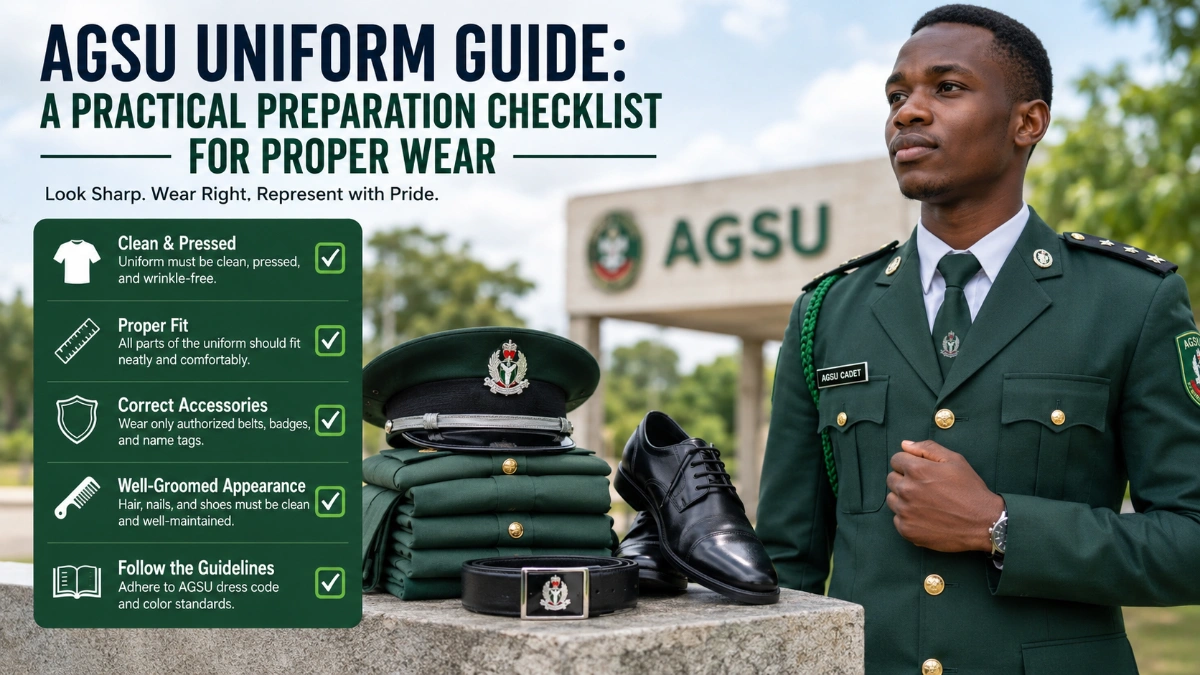
Agsu Uniform Guide: 9 Clear Answers for Better Uniform Decisions The Army Green Service Uniform can create confusion because Soldiers often need to understand both what the uniform includes and which details depend on current Army policy. This agsu uniform guide explains the major AGSU configurations, core components, practical preparation steps, common mistakes, and the […]
Agsu Uniform Guide: 9 Clear Answers for Better Uniform Decisions
The Army Green Service Uniform can create confusion because Soldiers often need to understand both what the uniform includes and which details depend on current Army policy. This agsu uniform guide explains the major AGSU configurations, core components, practical preparation steps, common mistakes, and the situations in which official guidance should always be checked.
The AGSU is the U.S. Army’s service uniform intended for professional and business environments. It draws inspiration from the Army uniform associated with the World War II era. The Army states that all Soldiers will be required to have an AGSU by October 1, 2027. At that point, the Army Service Uniform will become an optional formal and ceremonial uniform.
This article is designed to help readers understand the uniform system. It does not replace AR 670-1, DA PAM 670-1, Army directives, official wear guides, or instructions from a Soldier’s chain of command.
What Should You Understand First About AGSU?
A practical agsu uniform guide should begin with the idea that the Army Green Service Uniform is a complete uniform system rather than a collection of unrelated clothing items.
Before preparing the uniform, ask three questions:
- Which AGSU configuration applies?
- Which components, insignia, badges, and accessories are authorized?
- Does the situation require verification against current Army guidance?
These questions matter because not every AGSU combination is appropriate for every event or duty situation.
The Army currently identifies three major variations:
| Configuration | Basic Description | Key Point |
| AGSU Class A | Full service-uniform configuration | All components are worn |
| AGSU Class B | Service configuration without the coat | Insignia and accoutrements may be worn; necktie rules depend on shirt configuration |
| AGSU Tropical Dress Variation | Hot-weather variation based on Class B | Used as a Class A-equivalent configuration for hot weather |
The Army’s current Uniforms and Grooming Guide says Class A is worn with all components. For Class B, the coat is not worn, insignia and accoutrements are optional, and the necktie is optional with the short-sleeve shirt. The Tropical Dress Variation is intended as the hot-weather equivalent of Class A.
What Are the Main AGSU Components?
This agsu uniform guide becomes more useful when the uniform is viewed from head to toe.
The Army lists the following among the principal clothing-bag items for the AGSU:
- Heritage Green garrison cap
- Heritage Green service coat
- Heritage Tan long-sleeve shirt
- Heritage Tan short-sleeve shirt
- Heritage Green necktie
- Heritage Taupe trousers or slacks
- Heritage Walnut belt
- Antique brass belt buckle
- Heritage Walnut Oxford shoes
- Heritage Walnut socks
- Heritage Walnut gloves
- Heritage Green all-weather coat
Optional items identified by the Army include the Heritage Taupe skirt, pumps, service cap, leather bomber jacket, windbreaker, Eisenhower jacket, and V-neck sweater.
Service Coat
The AGSU service coat is Heritage Green and forms the central element of the Class A appearance.
Before wear, check:
- Fit and condition
- Correct insignia
- Authorized badges and ribbons
- Proper alignment of accessories
- Whether the coat is required for the selected configuration
Trousers, Slacks, Skirts, and Belt
The Army describes the trousers and slacks as Heritage Taupe. Current Army guidance also distinguishes aspects of male and female uniform wear.
The Heritage Walnut belt uses an open-face brass buckle. The Army’s current guidance states that the belt tip passes to the wearer’s left for male Soldiers and right for female Soldiers, with the tip extending no more than 1½ inches beyond the first belt loop.
Shirts and Necktie
The AGSU uses Heritage Tan long- and short-sleeve shirts.
Whether a necktie is required can depend on the configuration. For example, the Army currently states that the necktie is optional when the short-sleeve shirt is worn in Class B.
Footwear and Headgear
Heritage Walnut Oxford shoes and the Heritage Green garrison cap are standard clothing-bag components. Other authorized footwear and headgear may depend on the Soldier, configuration, status, and current policy.
How Are Class A and Class B AGSU Different?
One of the most common questions in any agsu uniform guide is the distinction between Class A and Class B.
AGSU Class A
Class A is the full service-uniform configuration.
According to current Army guidance:
- All required components are worn.
- The service coat is included.
- Appropriate insignia, awards, badges, and accessories are worn according to applicable rules.
- It may be used in settings for which the full service configuration is prescribed.
AGSU Class B
Class B is worn without the service coat.
Current Army guidance allows optional wear of insignia and accoutrements with the Class B uniform. The short-sleeve shirt may be worn without the necktie, subject to applicable guidance.
Tropical Dress Variation
The Tropical Dress Variation was authorized as a hot-weather alternative and is primarily intended for Soldiers serving in hot climates. Local commanders determine when the variation is worn.
Because commanders and current directives can affect what is appropriate for a particular occasion, Soldiers should confirm the required uniform before an event.
How Should Insignia, Badges, Ribbons, and Tabs Be Handled?
Insignia and awards are among the areas where exact placement matters most.
A reliable agsu uniform guide should not invent universal measurements or placement rules because requirements differ by item and may be updated.
Examples include:
- Grade or rank insignia
- Branch insignia
- Ribbons
- Unit awards
- Combat and special-skill badges
- Marksmanship badges
- Identification badges
- Tabs
- Shoulder sleeve insignia
- Service and overseas-service markings when authorized
For exact placement, use the Army’s official AGSU Wear Guide, DA PAM 670-1, and any applicable current directives.
The Army’s Uniforms and Grooming Guide specifically provides an AGSU Wear Guide containing illustrations and placement instructions.
What Should You Check Before Wearing AGSU?
This agsu uniform guide uses a simple four-step preparation process.
Step 1: Confirm the Required Configuration
Determine whether the event or duty requires:
- Class A
- Class B
- Tropical Dress Variation
- Another specifically authorized combination
Do not choose a configuration only because it looks more comfortable or formal.
Step 2: Review Every Component
Check:
- Coat, when required
- Shirt
- Trousers, slacks, or authorized skirt
- Belt and buckle
- Shoes and socks
- Headgear
- Necktie
- Insignia
- Ribbons
- Badges
- Authorized accessories
Step 3: Review Overall Appearance
Check the complete uniform for:
- Cleanliness
- Serviceable condition
- Proper fit
- Correct alignment
- Consistent appearance
- Missing components
- Unauthorized items
Step 4: Verify Exact Details
Use official Army sources whenever the question concerns:
- Exact insignia placement
- Ribbon or badge placement
- Whether an item is authorized
- Which configuration is required
- Recent uniform-policy changes
- Local commander requirements
Is the AGSU Mandatory in 2026?
As of September 2026, the Army’s published transition timeline states that October 1, 2027 is the date by which all Soldiers are required to wear the AGSU.
Until that transition is complete, Soldiers should follow current Army policy and instructions applicable to their status and organization.
The Army states that once the October 1, 2027 transition is complete, the Army Service Uniform will become an optional formal and ceremonial uniform.
Which Official Sources Should You Use?
The best way to use an agsu uniform guide is alongside official references rather than as a substitute for them.
AR 670-1
Army Regulation 670-1: Wear and Appearance of Army Uniforms and Insignia
This regulation establishes Army policy governing uniform wear and appearance.
DA PAM 670-1
Department of the Army Pamphlet 670-1: Guide to the Wear and Appearance of Army Uniforms and Insignia
DA PAM 670-1 provides detailed implementation guidance. Its AGSU chapters address areas such as classification, composition, accessories, coats, trousers, shirts, headgear, insignia, and related wear requirements.
Army AGSU Wear Guide
The official Army Uniforms and Grooming Guide provides an AGSU Wear Guide with illustrated instructions for insignia placement and other wear details.
When regulations, local instructions, and unofficial websites conflict, official Army guidance and the applicable chain of command should control.
What Are Common AGSU Mistakes?
Assuming Every Photo Shows the Correct Setup
A photograph may show one authorized configuration but not explain the circumstances under which it is permitted.
Treating Class A and Class B as Interchangeable
They are different configurations with different required components.
Guessing Insignia or Badge Placement
Small placement errors can affect overall compliance. Use official diagrams rather than estimates.
Using Old Online Advice
Uniform policies can change. Check publication dates and current Army resources.
Buying Accessories Based Only on Appearance
An item resembling an authorized component is not necessarily authorized.
Forgetting Local Instructions
Commanders may prescribe uniforms for events or duty situations within applicable Army policy.
Quick AGSU Preparation Checklist
A dependable agsu uniform guide should leave the reader with a practical final checklist.
Before wearing the AGSU, confirm:
- Correct configuration
- Correct shirt
- Coat included when required
- Proper trousers, slacks, or authorized skirt
- Correct belt and buckle
- Appropriate footwear
- Correct headgear
- Necktie worn when required
- Rank and branch insignia checked
- Ribbons and awards checked
- Badges and tabs checked
- Accessories are authorized
- Uniform is clean and serviceable
- Exact placement has been verified
- Current Army or command guidance has been reviewed
Frequently Asked Questions
AGSU stands for Army Green Service Uniform. It is the U.S. Army service uniform intended for professional and business environments.
Class A includes the complete uniform configuration with the service coat. Class B is worn without the coat and has different rules for components and optional accoutrements.
It is a hot-weather variation based on the Class B configuration and serves as an alternative to Class A in appropriate circumstances. Local commanders determine when it is worn.
Current Army guidance says the necktie is optional when the short-sleeve shirt is worn with Class B. Other shirt configurations should be checked against current guidance.
The standard AGSU trousers and slacks are Heritage Taupe.
Heritage Walnut Oxford shoes are among the standard clothing-bag components. Other footwear options may be authorized for specific Soldiers or configurations.
Exact placement should be checked in the official AGSU Wear Guide and DA PAM 670-1 rather than estimated from photographs or unofficial diagrams.
The Army’s current transition timeline states that all Soldiers must wear the AGSU beginning October 1, 2027.
Army uniform wear is governed primarily by AR 670-1 and DA PAM 670-1, along with applicable Army directives and policy updates.
Yes. Uniform rules, authorized items, and wear guidance can be revised. Any agsu uniform guide should therefore be checked against the latest Army publications before it is used for compliance decisions.