







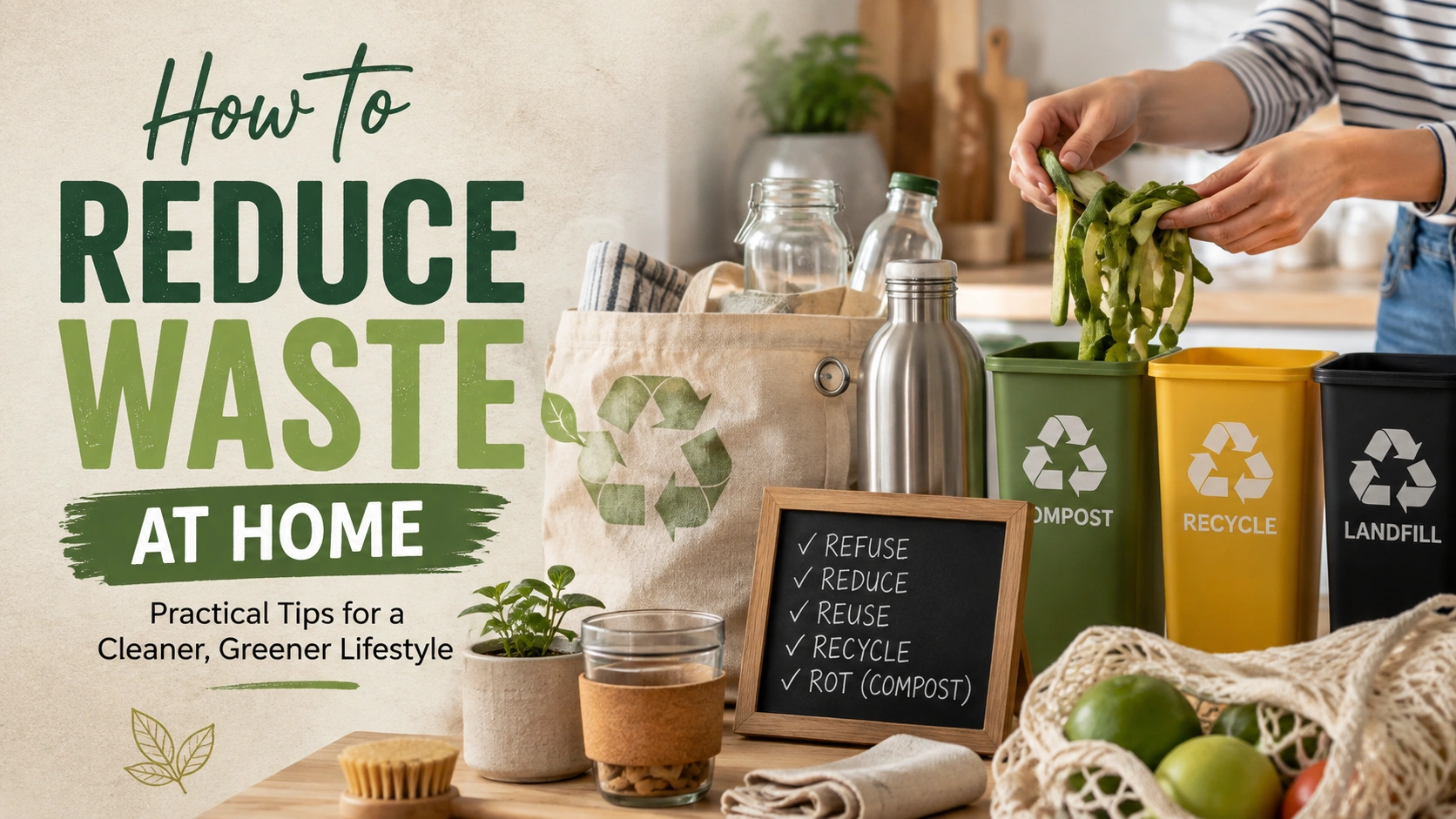
How to Reduce Waste at Home: Tips for Simple, Sustainable Habits Household waste becomes easier to reduce when you prevent it before it reaches the bin. The most useful how to reduce waste at home tips are not about buying lots of new “eco” products; they are about using what you have more carefully, purchasing […]
How to Reduce Waste at Home: Tips for Simple, Sustainable Habits
Household waste becomes easier to reduce when you prevent it before it reaches the bin. The most useful how to reduce waste at home tips are not about buying lots of new “eco” products; they are about using what you have more carefully, purchasing less packaging, and creating routines that stop food and everyday items from being discarded too soon.
Start with one category that creates the most rubbish in your home. A few consistent changes are more effective than trying to change everything at once.
Start With the Waste Hierarchy
A simple hierarchy can guide everyday decisions: reduce first, reuse and repair next, compost suitable organic materials where possible, and recycle what remains according to local rules.
| Priority | What It Means | Household Example |
| Reduce | Prevent waste before it is created | Buy only what you need and choose products with less packaging |
| Reuse | Use an item repeatedly | Carry a refillable bottle or store leftovers in reusable containers |
| Repair | Keep items useful longer | Mend clothing or fix an appliance before replacing it |
| Compost | Manage suitable food and garden materials | Compost vegetable peels and dry leaves |
| Recycle | Process accepted materials into new products | Sort clean containers according to local guidance |
Reducing waste at the source is generally the preferred approach because it avoids the need to collect, sort, process, or dispose of materials later.epa
Do a Quick Home Waste Audit
For one week, notice what you place in your rubbish and recycling bins. You do not need to weigh or catalogue every item. Just identify the categories that show up most often.
Common patterns include:
- Spoiled food and leftovers
- Plastic wrappers and product packaging
- Paper, mail, and delivery boxes
- Disposable wipes, razors, or cleaning products
- Clothing, furniture, or household items that could have been repaired or passed on
Use the result to choose your first action. If food waste is the main problem, focus on meal planning and storage. If packaging dominates, focus on how you shop. This approach keeps your effort practical and targeted.
Reduce Food Waste in the Kitchen
The kitchen is often the most effective place to begin because shopping choices, packaging, leftovers, and food scraps all come together there.
Plan Meals and Shop With a List
Before shopping, check your fridge, freezer, and cupboards. Make a list based on what you need and the meals you realistically expect to prepare.
- Plan meals around food you already have.
- Buy perishable ingredients in amounts you can finish.
- Avoid duplicate purchases by checking supplies first.
- Include leftovers in your meal plan.
- Freeze suitable food before it spoils.
A shopping list can also reduce impulse purchases that later become unused food or unnecessary packaging.
Use Older Groceries First
The FIFO method means “first in, first out.” Place older food at the front of your fridge, pantry, and freezer, then put newer purchases behind it.
This habit makes food that needs using more visible. Keep leftovers in clear containers, label items where helpful, and reserve one area of the fridge for food that should be eaten soon.
Flexible meals are useful for ingredients nearing the end of their best condition. Soups, curries, sauces, stir-fries, smoothies, and packed lunches can often use small amounts of produce, leftovers, or cooked grains.
Choose Less Packaging
Packaging becomes waste as soon as it comes through the door. When you have a choice, select goods with less unnecessary wrapping, reusable packaging, or refill options.
- Buy loose fruits and vegetables when available.
- Bring reusable shopping bags.
- Carry a refillable water bottle.
- Use reusable containers for food and leftovers.
- Choose bar soap, refill packs, or concentrated cleaners when they suit your household.
- Buy in bulk only when you can store and use the full quantity.
Bulk buying can reduce packaging, but it is not helpful when food spoils or products remain unused.
Compost Suitable Organic Materials
Composting can turn suitable food scraps and garden material into a soil amendment for gardens and potted plants. A basic compost pile needs a mix of nitrogen-rich “greens,” carbon-rich “browns,” moisture, and air.
Set Up a Simple Composting Routine
Many basic systems use fruit and vegetable scraps, coffee grounds, tea materials, dry leaves, small twigs, and uncoated cardboard. Store food scraps in a closed container until you add them to your pile, bin, worm system, or available food-waste collection service.
- Add dry brown material with wetter food scraps.
- Keep the mixture damp rather than waterlogged.
- Cover food scraps with leaves or other brown material.
- Turn an outdoor pile from time to time so air can circulate.
- Follow the rules of your particular system for meat, dairy, and oily foods.
If you have no outdoor space, check for community composting, food-waste collection, or a compact worm-composting option.
Replace Disposable Items Gradually
Creating less waste does not mean throwing away usable things and buying a complete set of replacements. Use current products until they are finished, then choose a reusable, refillable, or longer-lasting alternative when it makes sense.
Bathroom and Cleaning Habits
Bathrooms and cleaning cupboards often contain many small, disposable products. A gradual switch can reduce the amount of packaging and single-use material you discard.
- Choose bar soap, shampoo bars, or refillable dispensers where practical.
- Use washable cloths for cleaning instead of relying entirely on disposable wipes.
- Consider a reusable razor if it suits your needs.
- Reuse containers for storage only when they have a genuine purpose.
- Choose refillable or concentrated cleaning products where available.
Laundry Habits
Laundry routines can also create waste through disposable products and premature clothing disposal.
- Use reusable dryer balls instead of single-use dryer sheets.
- Air-dry clothes when practical.
- Use only the amount of detergent you need.
- Repair missing buttons, loose seams, and small tears.
- Choose durable garments and care for them to extend their useful life.
Reduce Paper and Delivery Waste
Paper often builds up gradually through bills, receipts, catalogues, packaging, and printed documents. A few simple defaults can prevent it from becoming clutter.
- Select digital bills, statements, and receipts.
- Decline unwanted catalogues and promotional mail.
- Print only documents that require a physical copy.
- Use the blank side of printed pages for notes.
- Reuse clean delivery boxes and packing material for storage, future parcels, or crafts.
- Keep digital files organized so printing is not the easiest option.
Keep Useful Products in Circulation
Before replacing an item, ask whether it can be repaired, borrowed, shared, donated, sold, or repurposed. Extending a product’s useful life can prevent unnecessary purchases and disposal.
Repair, Borrow, and Buy Secondhand
Repairing products such as clothing, appliances, and furniture can prevent premature replacement. Borrowing or sharing tools and occasional-use equipment can also reduce clutter and avoid purchases that may rarely be used.
- Mend a button, seam, or small tear.
- Look for local repair services for appliances, electronics, or furniture.
- Borrow tools, party supplies, and equipment used only occasionally.
- Buy secondhand clothing, books, furniture, and household goods when appropriate.
- Donate or sell usable items you no longer need.
- Choose durable products with repairable parts when possible.
Repurpose Without Creating Clutter
Repurposing works best when you have a clear, immediate use for an item. Do not keep every jar, box, or container simply because it might be useful one day.
A glass jar can hold dry food, screws, or craft supplies. A worn cotton shirt can become cleaning cloths. A chipped cup can store pens or hold a small plant.
Recycle Correctly
Recycling has a role in a lower-waste household, but it is most effective after you have reduced, reused, repaired, or composted what you can. Local recycling programs differ, so always follow the instructions provided by your local authority or collection service.
Putting food-contaminated or non-accepted materials into a recycling bin can disrupt sorting and contaminate other materials. Avoid “wishcycling,” which means recycling an item just because you hope it will be accepted.
- Empty and clean containers as required locally.
- Separate materials if your collection system requires it.
- Keep non-accepted materials out of regular recycling.
- Take batteries, electronics, paint, chemicals, and similar items to approved collection points.
- Keep a local recycling guide near your bins.
Make the Habit Easy to Repeat
A waste-reduction habit succeeds when it is convenient. Keep reusable shopping bags near the door, place a food-scrap container close to where meals are prepared, maintain a running shopping list on your phone, and move older groceries to the front when unpacking.
Choose one improvement from your waste audit and repeat it until it becomes automatic. Then add the next. The aim is not a perfectly waste-free household; it is a home that buys thoughtfully, uses items fully, and sends less to the bin.
Frequently Asked Questions
Notice what fills your bin most often for one week, then target that category. Meal planning, reusable bags, and avoiding excess packaging are accessible starting points.
Recycling can recover materials, but it does not stop waste from being created. Reducing purchases, reusing items, and repairing products should come first.
Check what you already have before shopping, plan meals, use older groceries first, save leftovers, and freeze suitable food before it spoils.
Many basic systems accept fruit and vegetable scraps, coffee grounds, tea materials, dry leaves, twigs, and uncoated cardboard. Follow the guidance for your specific composting system.
No. Use existing products until they are worn out or finished. Replace them gradually with durable or refillable options only when you need to.
Use up existing products first, then consider bar soap, refillable dispensers, washable cleaning cloths, reusable razors, and products with less packaging.
No. It reduces packaging only when you can use the full amount. Avoid bulk purchases that lead to spoiled food or unused products.
Repair, donate, sell, share, lend, or repurpose them before discarding. Consider local secondhand shops, community groups, and repair services.
Follow local collection guidelines, keep unsuitable and food-contaminated items out, and use specialist drop-off services for batteries, electronics, chemicals, and other materials not accepted at the kerbside.